

“Healing touch therapy” is a label used for services that can differ in training, format, claims, touch practices, privacy, cost, and provider boundaries. It is not a diagnosis, an energy assessment, proof of safety, a trauma service, or a substitute for healthcare or mental-health care.
Touch-based services are where sensual wellness for women most often outruns its evidence. This is an evidence- and consent-led guide to evaluating a service before you book or participate. It does not recommend a practitioner, teach an internal touch or biofield technique, assess your energy, prescribe a schedule, or promise relief, healing, sleep, pain, immune, emotional, trauma, or spiritual results. No named provider, price, credential, availability, booking route, affiliate offer, or tracking route was verified in this pass.
Table of Contents
- What the label can and cannot tell you
- The evidence boundary
- Consent and touch come before the session
- What to check before booking
- Questions for a practitioner
- When this is not the right route
- Common questions
- Keep the decision specific and optional
What the label can and cannot tell you
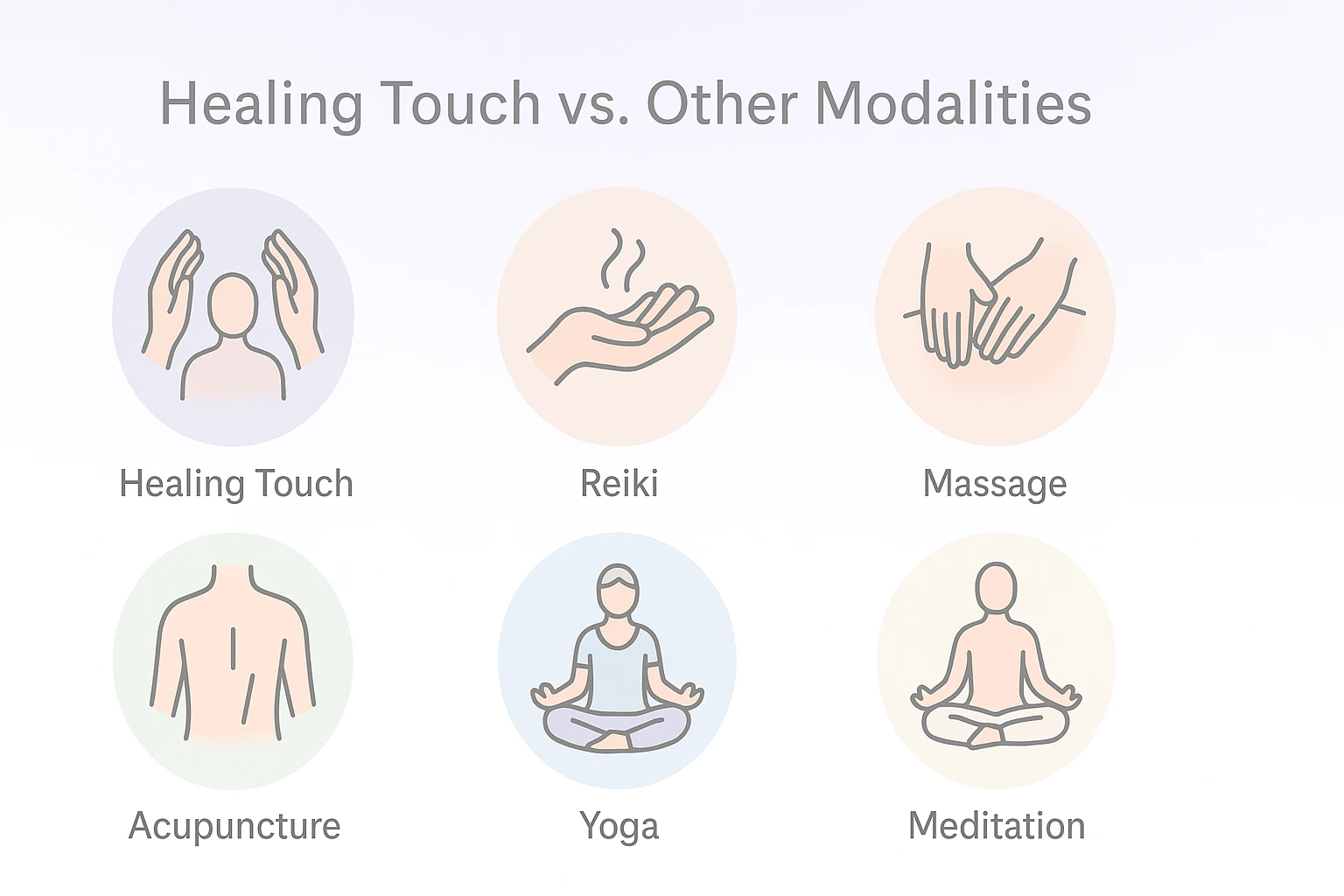
Names such as healing touch, energy work, therapeutic touch, Reiki, or hands-on/hands-near wellbeing services may refer to different approaches. A label does not tell you exactly what will happen, whether touch is involved, how consent works, what qualifications a provider has, how information is handled, or what a provider means by terms such as balance, energy, healing, trauma-aware, safe, or holistic.
Do not assume that one named service is the same as another. The same screening applies to adjacent labels—general wellness guidance and coaching described as sexual wellness raise it in their own terms. Ask a specific provider to describe the actual format and limits in plain terms before you share private information, travel, pay, or agree to any activity.
The evidence boundary
For a related biofield practice, the U.S. National Center for Complementary and Integrative Health’s page on Reiki says Reiki has not been clearly shown effective for any health-related purpose, that study results have been inconsistent and often low quality, and that there is no scientific evidence supporting the proposed energy field. That page is about Reiki; it does not establish that every service labelled healing touch is the same practice or that a specific provider is safe, qualified, or appropriate.
For that reason no claim is made here about clearing energy, balancing an aura, releasing trauma, or improving pain, anxiety, sleep, immunity, focus, mood, or any other health-related outcome.
“Energy alignment” is a marketing or belief-based phrase rather than a measurable state. Likewise, describing a service as suitable for “trauma survivors” does not make it trauma treatment or prove that a practitioner has appropriate mental-health qualifications. Ask exactly what is offered and use qualified individual trauma support where that is the concern.
Consent and touch come before the session
Ask before booking whether the service involves touch, hands held near the body, movement, breath-focused activity, guided imagery, recording, a group format, or another practice. Ask which parts are optional, how you can request distance or no touch, and how you can pause, stop, or leave. Payment, an intake form, a previous yes, a provider’s usual method, or a wellness label does not create consent for a new activity.
You do not need to share a trauma history, medical history, sexual history, identity, body experience, or spiritual belief to receive a clear description of a service. Pressure to disclose or to treat a boundary as resistance is information for your decision.
What to check before booking
| Area | What clear information looks like | Why it matters |
|---|---|---|
| Service description | The provider explains what may happen, what is optional, and what they do not provide. | You can assess the real format rather than a marketing label. |
| Claims and scope | The provider avoids diagnosis, treatment, cure, trauma-resolution, energy-diagnosis, or outcome guarantees and identifies limits. | No wellness service should displace needed healthcare or mental-health support. |
| Consent and contact | Advance clarity on touch/near-body work, areas approached, clothing, distance, how you decline or stop, and whether any activity is required. | Booking is not consent for touch or another activity. |
| Training and accountability | Specific, checkable training/qualification information, accurate role claims, a way to raise concerns, and a referral approach for out-of-scope needs. | A broad title does not establish competence or a complaint process. |
| Privacy and practical terms | Full cost, cancellation/refund policy, location, accessibility, data/notes/recording practices, group rules, and communication terms before payment. | Privacy and financial terms should not be assumed. |
Questions for a practitioner
You can ask for clarity without sharing your medical history, trauma history, sexual history, identity, body experience, beliefs, or reason for considering a service.
- “How do you describe this service, and what do you not provide?”
- “What may happen in a session? Is any touch, hovering, movement, breath-focused activity, recording, or group sharing involved?”
- “How can I decline, pause, stop, leave, or request no touch without penalty?”
- “What training or qualifications inform your work, and how do you represent your role?”
- “What are the full cost, cancellation, access, privacy, notes, recording, and communication terms?”
- “What would lead you to suggest a different type of support or referral?”
Pressure to book immediately, vague descriptions of touch or scope, healing guarantees, claims to identify blocked energy or diagnose a cause, demands for disclosure, or discouragement from seeking other qualified support are reasons to pause.
When this is not the right route
For symptoms with a physical cause, the clinical route is the separate one, and plain preference language covers the non-clinical side without a technique. Do not use a healing-touch page or service to decide why there is pain, bleeding, a change in sensation, medication concern, pregnancy/postpartum question, pelvic-health issue, infection concern, trauma response, anxiety, depression, relationship safety concern, or need for treatment. A practitioner, article, quiz, retreat, product, or app cannot diagnose, assess urgency, determine readiness, or replace appropriate qualified local, confidential specialist or emergency support.
Where there is fear, coercion, stalking, threats, control, monitoring, isolation, or violence, do not rely on a body-based, coaching, relationship, or wellness service as a safety plan. Prioritise confidentiality and local specialist or emergency support.
Common questions

Keep the decision specific and optional
A service label cannot establish evidence, safety, consent quality, privacy, or suitability. You can ask for clear terms, say no to touch or any other activity, take time, choose no service, or use another support route. Where a health, trauma, or safety concern is present, choose the appropriate qualified local support rather than relying on an energy or wellness claim.