

This free self-care journal PDF is a short printable set of optional reflection pages. It is for private use, not a mood score, a productivity plan, or a promise that writing will solve a particular problem. Use a page, change a prompt, leave it blank, or decide that journaling is not the right support today.
This is one of the site’s free self-care resources, designed around ordinary questions about what has your attention, what would make the day more workable, needs and boundaries, and one possible next choice. It does not require a particular identity or a daily habit. The women’s self-love hub provides the broader support map.
Download the free self-care journal PDF
Table of Contents
- What the journal is for
- What’s inside the PDF
- How to use it
- When journaling is not the right route
- Download the journal
- If you want a longer workbook
- If the page stays blank
- Common questions
- Use only what helps
What the journal is for
A journal can give you a private place to put a thought, question, preference, or practical note. It does not have to become a routine, a record of progress, or evidence that you are “doing self-care correctly.” Some readers may prefer a single sentence; others may prefer a list, drawing, talking with someone, or no reflection at all.
The printable is deliberately non-prescriptive. It does not ask you to rate yourself, interpret a feeling as proof of a hidden cause, or follow a fixed number of days. It treats stopping, changing the prompt, and leaving something unresolved as valid outcomes. If what you want is a direction rather than a page to write on, choosing one without turning it into a scoreboard is the closer route.
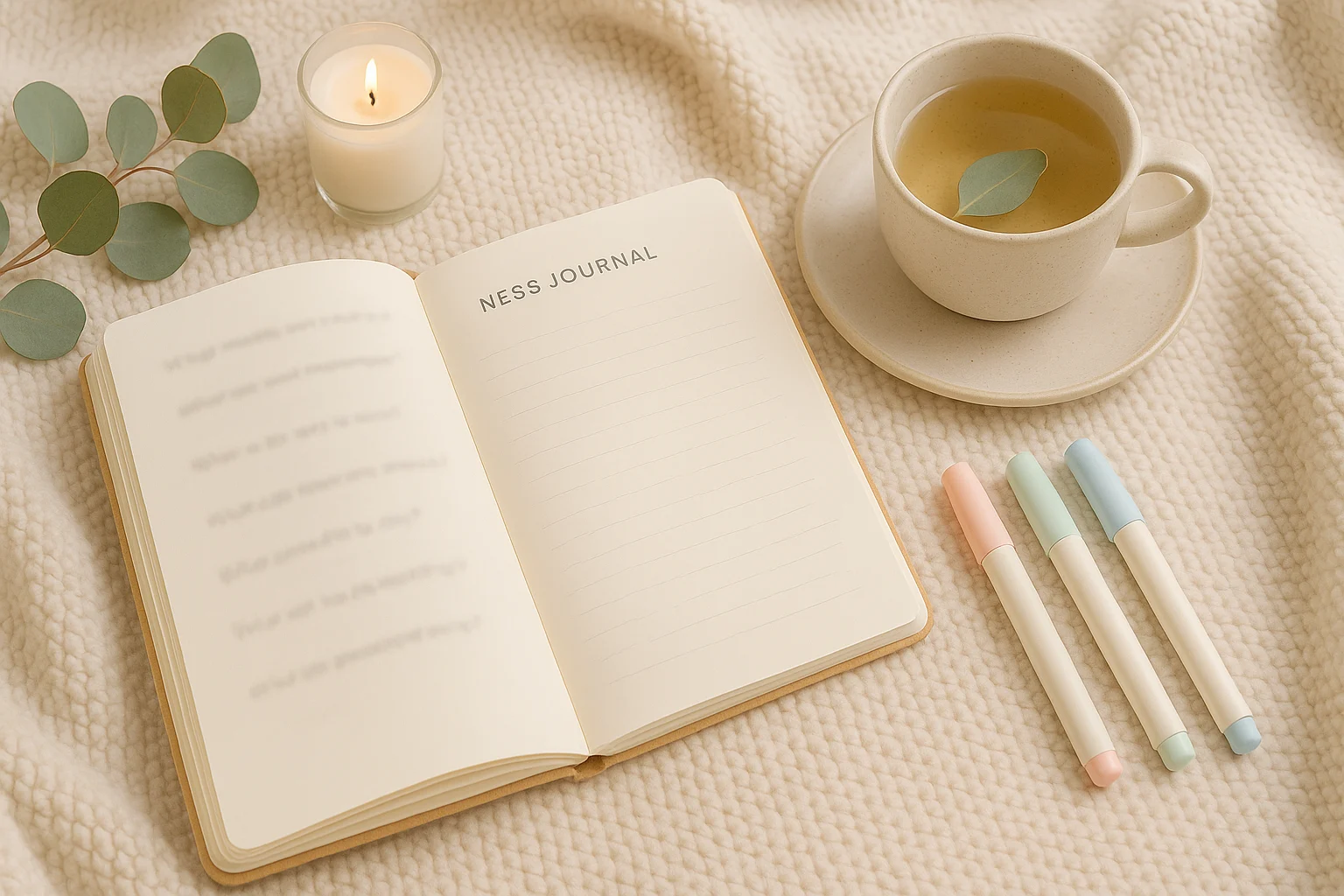
What’s inside the PDF
| Page | Purpose | What it does not ask you to do |
|---|---|---|
| Before you begin | Sets the privacy, scope, and permission boundary. | Commit to a daily routine or disclose anything unsafe to write down. |
| What has my attention? | Makes space for one current thought and a practical comfort question. | Find a lesson or solve the whole situation. |
| Needs, preferences, and boundaries | Offers private prompts about what feels available, too much, or worth considering. | Justify a boundary or make a decision before you are ready. |
| Notice without scoring | Lets you note an ordinary welcome moment, question, or change you might make. | Rate a mood, keep a streak, or turn feelings into a diagnosis. |
| A next choice, if wanted | Creates room for one question, information step, pause, or support route. | Prove motivation or commit to a self-improvement plan. |
| When to use a different route | States when qualified, confidential specialist, or emergency support may be more appropriate. | Use a journal instead of care for a high-consequence situation. |
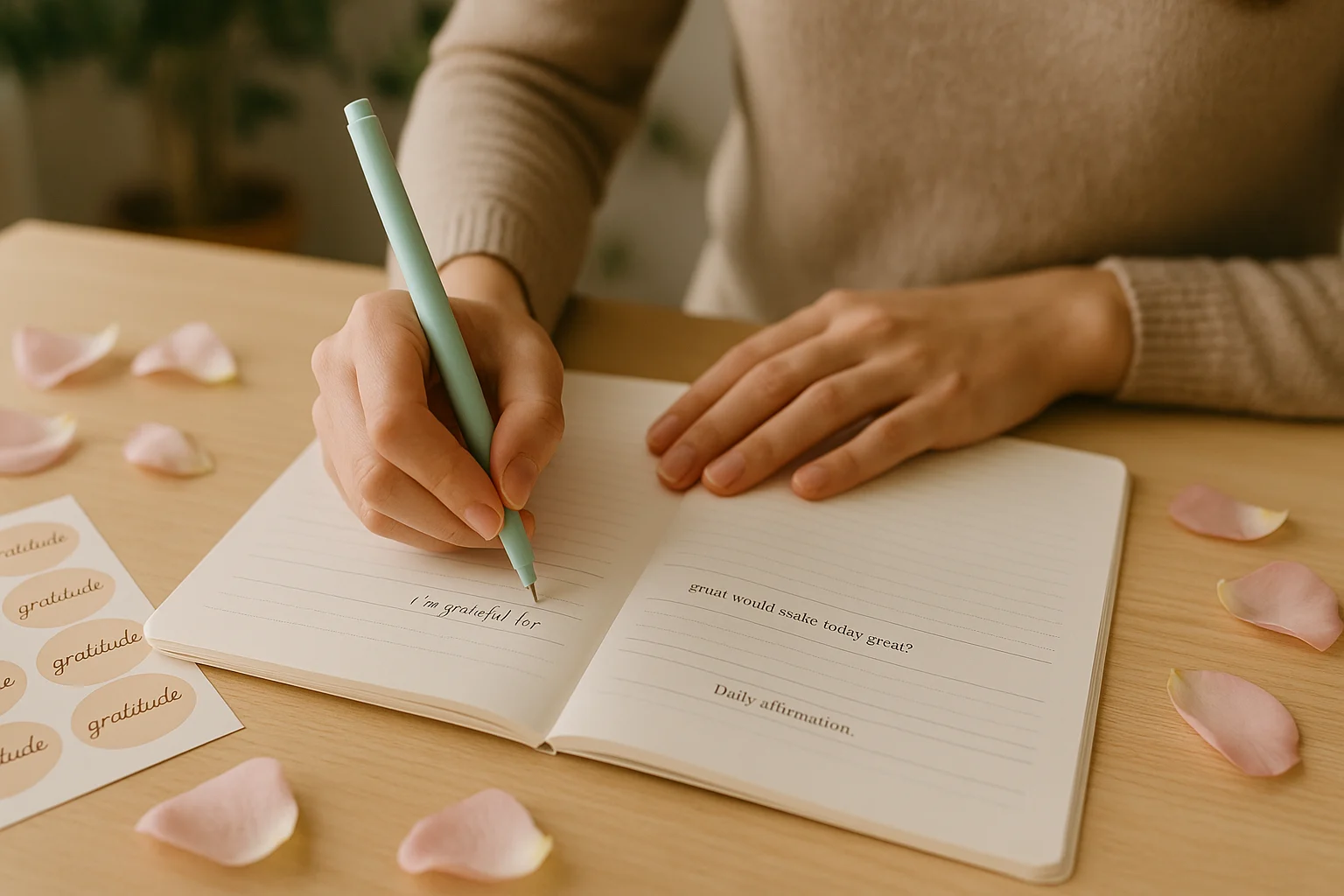
How to use it
Self-care journaling does not need a fixed sequence here. Download the PDF, print the pages you want, or use it digitally if that is easier. You can begin anywhere. The only practical question is whether the page is useful in the context you are in now. If the answer is no, you can close it and choose another option.
For some people, a private note helps clarify a question they want to bring to a conversation or appointment. For others, a page may simply make a pause feel more intentional. Neither use makes the journal a replacement for professional advice, emergency support, or direct action when safety is involved. Some people use it during an evening set aside for their own company; others use it for five minutes before bed. Both count.
When journaling is not the right route
Do not rely on a self-guided journal to decide a medical, mental-health, trauma, legal, financial, employment, or safety matter. Stop and use an appropriate qualified local, confidential specialist, or emergency route when a concern is painful, distressing, persistent, severe, unsafe, or difficult to manage. You do not need to write down an experience in order to deserve support.

Download the journal
The repaired printable contains seven US-letter pages and is intended for private reflection. The download does not require an email address.
Download the free self-care journal PDF
If you want a longer workbook
The free pages above are enough for most readers, and stopping there is a complete answer. Want more structure than the free pages?
Self-Love Workbook for Women
A longer, more structured paid workbook for readers who want more prompts — not an upgrade you need in order to use the free journal.
If the page stays blank
A printed prompt can sit untouched for weeks, and the usual conclusion is that journalling is not for you. That may be true. It is more often one of three other things.
The prompt may be too large for the day you are having. “What do I need right now” is a reasonable question and an impossible one at eleven at night. A smaller version — one word, one line, the thing you would say if someone asked in passing — is not a lesser use of the page. It is the use most people actually get something from.
Or the honest answer is not something you want written down. Paper is not private in a shared house, and knowing a sentence could be read changes what you are willing to put in it. Writing something deliberately vague, tearing the page out afterwards, or leaving the thought unwritten are all reasonable responses to a real constraint rather than avoidance.
Or there is genuinely nothing to record, which is a complete answer and not a wasted download. A blank page on a day that did not need one is the thing working as intended, and there is nothing to catch up on later.
Common questions
Use only what helps
The journal is there if a private reflection page feels useful. It is also fine to use only one prompt, leave a page blank, keep your attention elsewhere, or choose a different kind of support. The choice remains yours.