
When conversations keep circling, a small, repeatable exercise can give both people a clearer place to begin. This guide offers at-home exercises for couple therapy that focus on listening, reconnection, shared expectations, and calmer conflict repair. You may see the same practices called couples therapy activities or relationship strengthening exercises; the label matters less than whether both people actually want to try one. They are not a substitute for therapy, and they are not a test of whether a relationship is “good” or “bad.” They are simple structures you can try with care, then adapt to what helps you feel heard.
If you want a quick starting point, use the selector below. If you already know what feels difficult, jump to the exercise that fits. You can also return to the women’s relationship wellness hub for a broader route through this topic.
Table of Contents
- Start with a small agreement
- When you need a calmer conversation
- When you want to feel more connected
- When expectations are getting tangled
- When conflict is getting heated
- Choose a starting exercise
- Work Out What You Want to Say
- When extra support may help
- Frequently asked questions
- A small next step
Start with a small agreement
Choose a time when neither of you is rushed, hungry, exhausted, or already trying to win an argument. Before you begin, agree on one modest aim: “We are practising one conversation, not solving our whole relationship tonight.” Keep the exercise short, pause if either person becomes overwhelmed, and decide when you will check in again.
That small structure is enough to make a conversation less improvisational. It also makes it easier to notice which kind of exercise you need next.
When you need a calmer conversation
Use these exercises when the issue is not a lack of words, but the feeling that neither person is landing with the other. The goal is not perfect phrasing. It is to slow the exchange enough that each person can describe their experience without being immediately corrected.
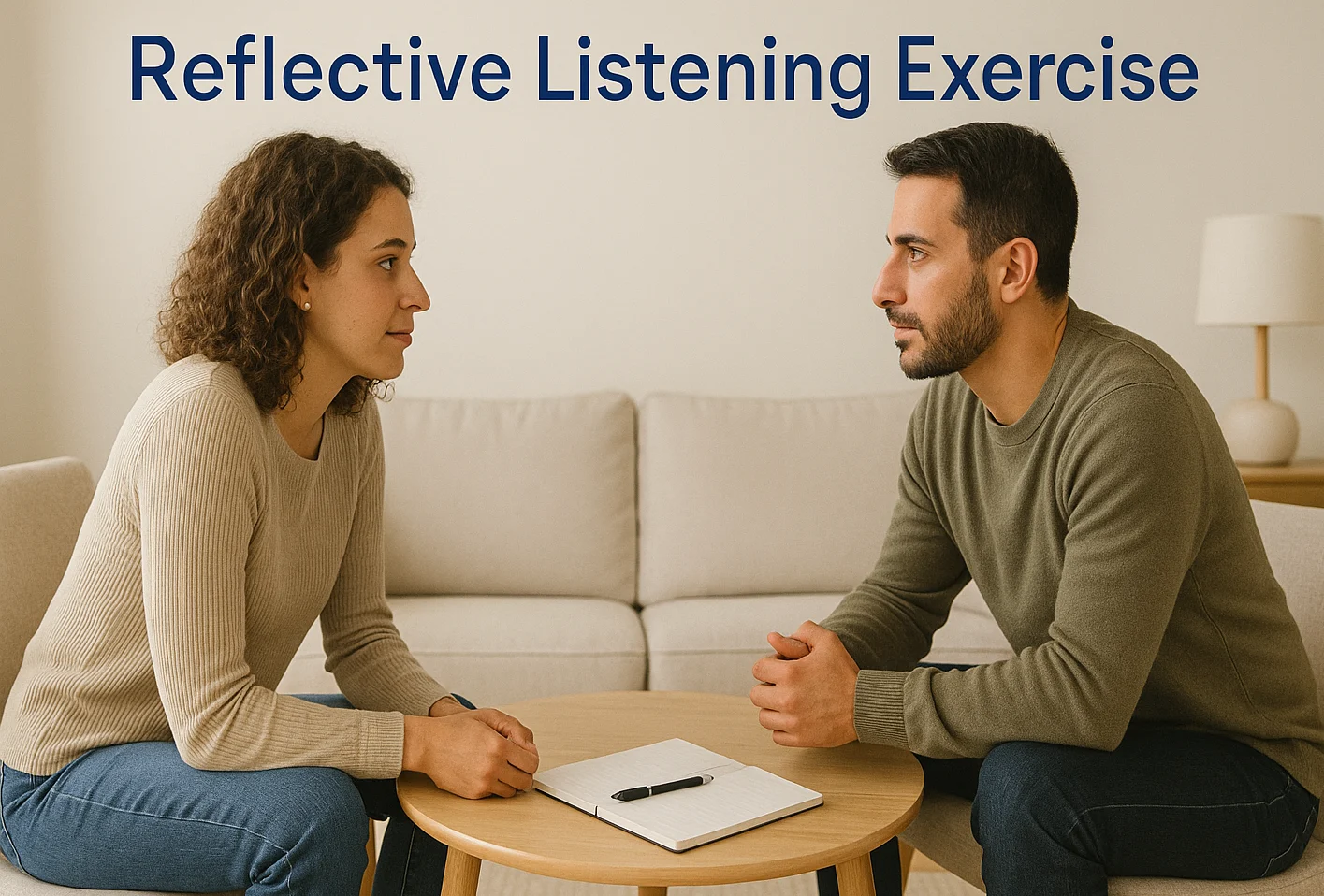
Reflective listening
Pick one recent, low-stakes moment. The speaker describes what happened and how it felt. The listener then reflects the meaning back in their own words before responding with their own point of view.
- Speak from one moment. Use “When that happened, I felt…” rather than bringing in a long list of past examples.
- Reflect before replying. Try: “What I hear is that you felt left out when…”
- Check the reflection. The speaker can say what was accurate or add what was missed.
- Switch roles. Give both people the same amount of room.
For more language that keeps the focus on needs rather than blame, see how to communicate needs in a relationship.
A needs-and-request sentence
After you have reflected the other person’s point, turn your own concern into a specific request. A useful pattern is: “When I notice [the situation], I feel [emotion], because I need [need]. Would you be willing to [small request]?” Keep the request possible to answer with a real yes, no, or counteroffer.

When you want to feel more connected
Distance is not always a crisis. Sometimes it is the quiet result of routines, stress, or many small moments of missed attention. These exercises are designed to create contact without turning one evening into a performance review.
The ten-minute check-in
Ask three open questions: “What took the most energy today?”, “What felt good?”, and “What would feel supportive this week?” The listener’s job is to stay curious, not to fix each answer. End by naming one small thing you appreciate about the other person’s effort.
One shared, low-pressure ritual
Choose something you can repeat: a short walk, a cup of tea without phones, music while cooking, or a weekly question card. The ritual does not need to be intense to matter. Its value is that it makes a small amount of attention more predictable. If you would like more ideas, explore bonding exercises for couples or how to build emotional intimacy.
When expectations are getting tangled
If a weekly question or ritual sounds useful, this printable check-in gives you a quiet place to notice what you want more of before the next conversation.
Many recurring arguments are less about one chore, plan, or purchase than about assumptions no one has said aloud. A shared expectations exercise can make the invisible part of the disagreement easier to discuss.
Write a two-column agreement
Choose one practical topic only: time together, household tasks, spending, family plans, or a recurring responsibility. Each person writes two short lists: “What I need to feel considered” and “What I can realistically offer.” Compare the lists, look for overlap, and write one experiment to try for a week. At the end of the week, discuss what worked before deciding whether to keep it.
Make room for individual goals
Shared plans work better when they do not erase either person’s individual hopes. Take turns naming one personal priority and one shared priority for the next few months. The exercise is not about forcing the same dream; it is about finding a way to be informed and supportive while you each make choices.
When conflict is getting heated
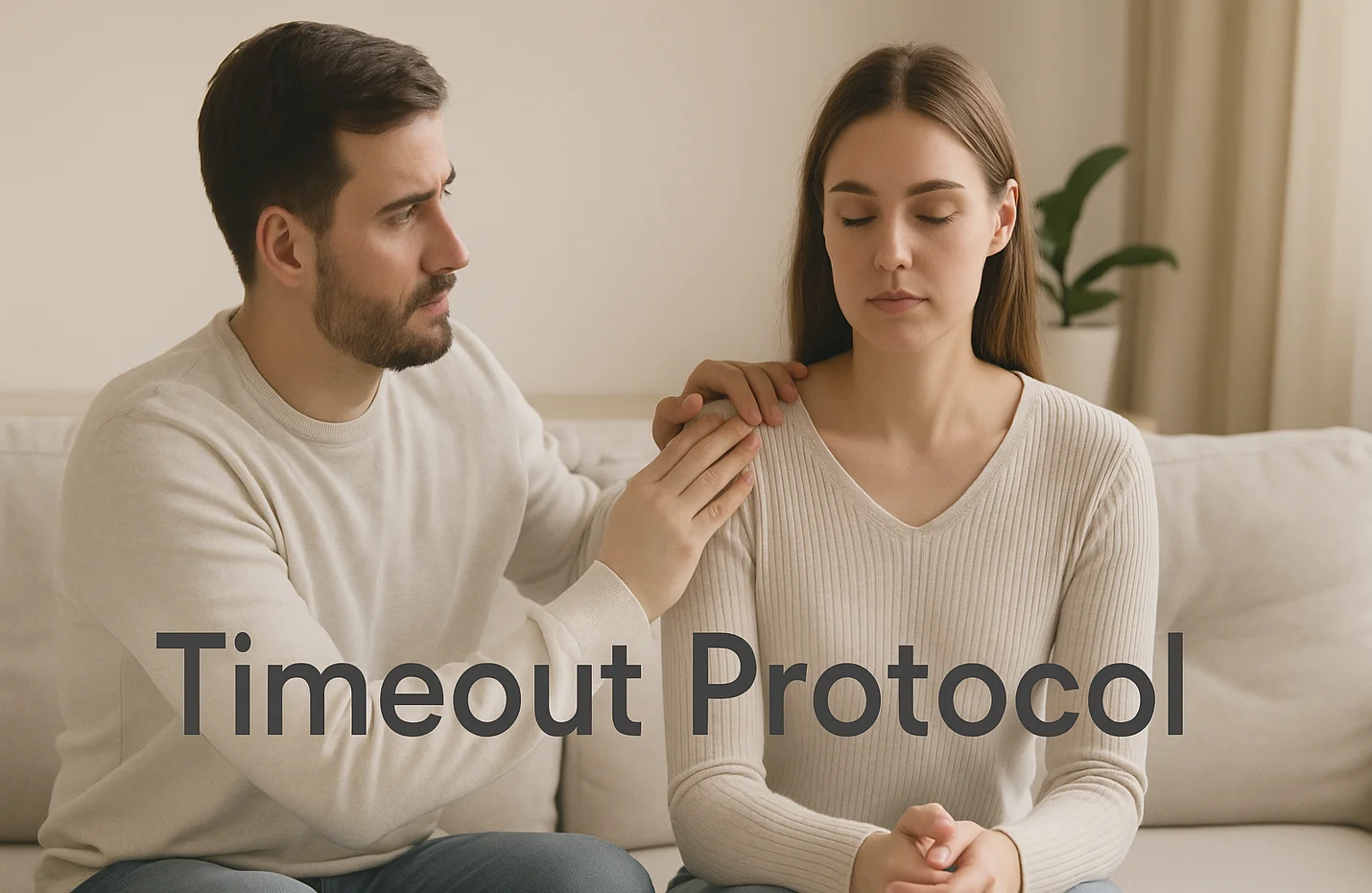
A pause can be useful when a conversation is moving faster than either person can think clearly. The important part is that the pause has a return plan; it should not become a way to disappear from the issue.
Use a reset with a return time
- Name the pause. Say that you need time to settle, not that you are refusing the conversation.
- Set a return point. Choose a realistic time later that day or the next day.
- Do something regulating. Walk, shower, breathe slowly, write privately, or use another quiet activity that helps you return less activated.
- Start smaller when you return. Reflect one point before making your own.
For an additional communication structure, you may find couples therapy exercises for communication useful.
A gentle route finder
Choose a starting exercise
Choose the situation that feels closest and the time you have. This is not an assessment; it simply points you to one small next practice in this guide. If there is fear, coercion, threats, or immediate danger, use the safety guidance above instead.
Choose both options to see one starting exercise.
The exercise you land on is only the first one. If you would rather keep a private note of how it actually went than decide on the spot whether it worked, there is a printable for that.
Work Out What You Want to Say
A 10-page printable you fill in privately. One of its pages is for working out how to phrase something before you have to say it out loud.
Confirm your email to receive it. Occasional emails, unsubscribe anytime.
Something went wrong. Please check your email address and try again.
When extra support may help
A general exercise can be useful for everyday connection, but it has limits. If a pattern keeps repeating, a conversation feels impossible to begin, or you want a private place to think through a non-urgent question, you may decide that outside support is the next step.
If you are specifically curious about an in-person, sensory-focused couples experience, read what couples tantric retreats can involve. That guide is a separate next question, not a replacement for the exercises above.
Frequently asked questions
A small next step is enough
You do not need to repair every difficult pattern in one conversation. Choose one exercise, decide how long you will try it, and revisit it with honesty about what felt useful. A small, repeatable practice can give a relationship a calmer place to begin.