

There is no universal postpartum date that tells you when intercourse is right for you. Recovery, birth details, symptoms, medications, emotions, sleep, feeding, and your own wishes can all matter. Physical readiness after birth is a clinical question. Whether you want to is not, and the two get answered by different people. What follows can help you prepare a question for your maternity clinician and protect a pressure-free conversation. It is not clearance, and no article can predict readiness or replace individualised care.
Table of Contents
- There is no universal deadline
- Start with your clinician
- A pause is valid
- Comfort is information, not a test
- When to seek care
- Talking without pressure
- No Deadline, No Schedule to Keep Up With
- Common questions
- Choose a supported next step
There is no universal deadline
It is understandable to look for one clear number after birth, so here is the general picture before the individual one.
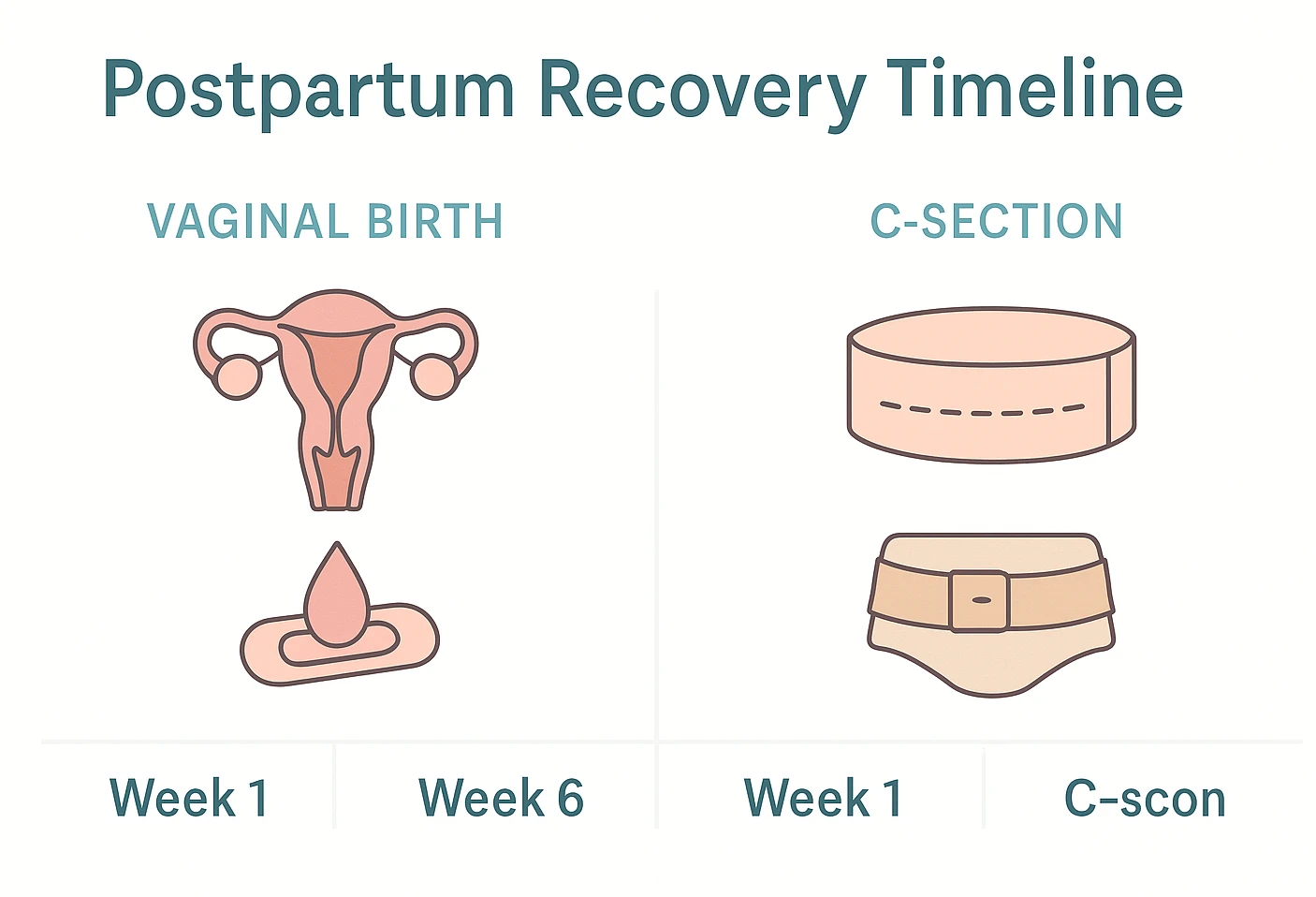
There is no medically mandated waiting period that applies to everybody. The familiar six-week figure is the usual timing of the routine postpartum check rather than a biological deadline — and the point of that appointment is to look at how healing has actually gone: bleeding, any tears or stitches, a caesarean incision, pain. Those are what make the difference, not the number of weeks. The risk of bleeding and infection is highest in the earliest weeks after birth, which is why general guidance is to wait at least until that appointment, and longer where there were complications.
Two things that number does not tell you. It is not clearance for you specifically — only a clinician who knows your recovery can give that. And clearance is not the same as readiness: being told that tissue has healed says nothing about sleep, pain, mood, feeding, contraception, or whether you actually want to.
A webpage cannot account for your delivery, exam findings, medications, or what you want. A general milestone is not permission, an obligation, or evidence that someone should feel ready.
It is valid if your next step is a question, more time, a follow-up appointment, a referral, non-demanding closeness, or no intimacy at all for now. Your consent must be freely given each time; being partnered, cleared for an activity, or past a calendar milestone does not create a duty to participate.
Start with your clinician
A maternity clinician who knows your recovery is the right person to ask about your particular situation. You can bring a short note rather than trying to decide everything in the appointment. For broader education before that conversation, the women’s pelvic health hub can help you organize your questions, but it cannot provide individual clearance.
| Question to bring | Why it helps |
|---|---|
| “Is intercourse appropriate for my recovery and history right now?” | It makes individual assessment, not a generic timeline, the starting point. |
| “What symptoms or changes mean I should pause and contact you?” | It gives you a clear reversal route. |
| “Could a pelvic-health referral or another follow-up be useful?” | It opens options without assuming an exercise, device, or treatment is right. |
| “What should I know about contraception or any medication questions?” | It keeps practical decisions with the clinician who can advise you personally. |
If pelvic floor recovery is part of what you want to discuss, this guide to postpartum pelvic floor care can help you prepare the questions for your appointment.
A pause is valid
Postpartum intimacy does not have to begin with intercourse. Some people want closeness; some want space; many want different things on different days. You do not need to manage another person’s disappointment or prove recovery through physical intimacy.
A useful boundary can be simple: “I care about us, and I am not ready for intercourse today. I would like to decide together what kind of closeness feels comfortable, if any.” A no, a pause, or a change of mind remains valid.
Comfort is information, not a test
Discomfort, dryness, anxiety, fatigue, uncertainty, or a change in desire do not tell a webpage what you need. Do not use a self-checker, online routine, internal tool, or product page to decide whether your body is ready. Stop rather than pushing through pain, fear, or pressure, and describe what you notice to a qualified clinician.

There is no score to pass and no expectation to resume on someone else’s schedule. Individual care may involve listening, examination, education, referrals, or a plan that changes over time. A website cannot choose among those options for you.
When to seek care
Contact your maternity clinician promptly for new or worsening symptoms, ongoing pain, bleeding concerns, difficulties with bladder or bowel habits, signs of infection, or worries about your emotional wellbeing. Seek urgent care appropriate to your area for severe or sudden pain, heavy bleeding, fever, inability to pass urine or stool, blood in urine or stool, or rapidly worsening symptoms.
If you feel unsafe, controlled, frightened, or pressured by a partner, prioritise immediate safety and local specialist support rather than treating the situation as an intimacy problem to solve together.
Talking without pressure
A short conversation can protect connection without setting a target. Choose a calm moment and name one thing that would help you feel respected—more rest, less expectation, affection without escalation, practical help, a future check-in, or space.
- “I want us to stay connected, and I need no expectation of intercourse while I recover.”
- “Can we check in about what feels welcome today, without treating any answer as a promise?”
- “I would like help preparing a question for my next appointment.”
These are invitations, not scripts a partner must accept. You can stop the conversation, revisit it later, or ask for support when talking alone does not feel safe or manageable.
If questions about recovery or comfort are still on your mind, having them written down before the appointment works better than hoping they surface at the right moment.
No Deadline, No Schedule to Keep Up With
Private by design. It asks what deserves attention now — nothing to track, nothing to report.
Confirm your email to receive it. Occasional emails, unsubscribe anytime.
Something went wrong. Please check your email address and try again.
Common questions
Choose a supported next step
Postpartum recovery is not a performance and intimacy is not a deadline. A supported next step might be a question for your clinician, a boundary with a partner, more time, a referral, or no change today. You deserve care that makes room for your health, comfort, and choice.