

Women’s pelvic health is part of whole-body health, and new or disruptive pelvic symptoms deserve an unhurried, individualized conversation with a qualified clinician. Pelvic health for women covers more than one system, and pelvic floor health is only part of it. What follows is general education to help you choose the next relevant question — not a diagnosis, self-test, treatment plan, or replacement for medical care.
This post has affiliate links. We may earn a commission. As an Amazon Associate, I earn from qualifying purchases. Learn more.
Table of Contents
- Start with symptoms, not a score
- Understand the pelvic floor in context
- Know when to seek care
- Know who actually treats this
- What an assessment usually involves
- Pelvic health across life stages
- Prepare for a clinical conversation
- Write the Questions Down Before You Go
- Explore focused guides
- Common questions
- Take one careful next step
Start with symptoms, not a score
Symptoms can change with life stage, activity, pregnancy, birth, surgery, health conditions, medication, or no obvious event. A checklist cannot establish whether a muscle is weak, tight, injured, or otherwise involved. Instead, note what you notice, when it began, what affects it, and how it changes daily life; that information can make a clinical conversation more useful.
Seek urgent medical care for severe or sudden pelvic or abdominal pain, heavy bleeding, fever, inability to pass urine or stool, blood in urine or stool, or other rapidly worsening symptoms. For non-urgent but bothersome leaking, pressure, bulge sensations, difficulty emptying the bladder or bowels, or pain, arrange a clinical discussion rather than self-diagnosing.
Understand the pelvic floor in context
The pelvic floor is a group of muscles and connective tissues in the base of the pelvis. It works alongside other systems involved in bladder, bowel, movement, and sexual wellbeing. “More strength” is not always the goal: symptoms can have different causes, and the appropriate next step depends on the person and the clinical context.
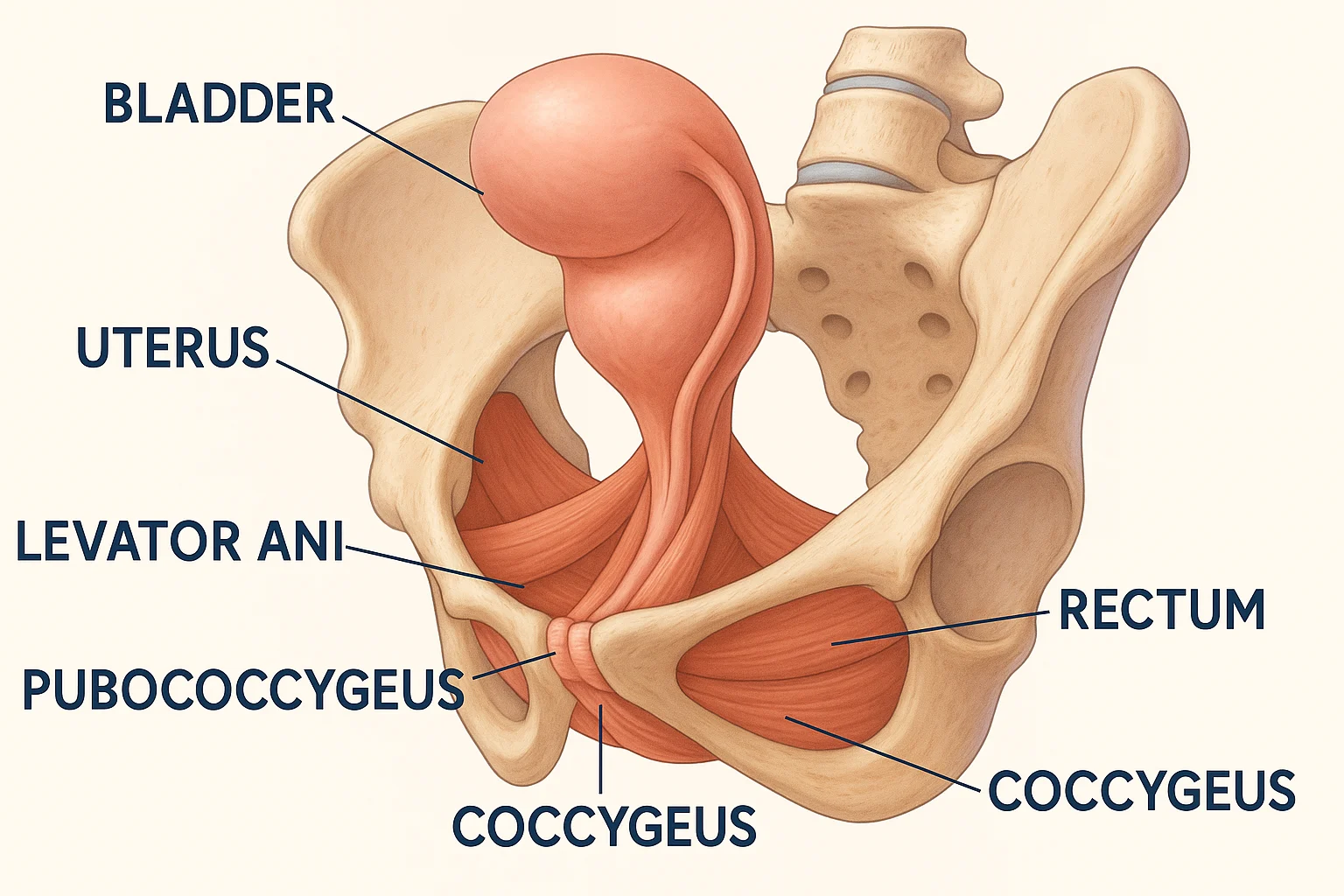
For a patient-focused overview of pelvic organ prolapse symptoms and care discussions, see ACOG’s educational overview.
Know when to seek care
There is no “normal amount” of disruption you must tolerate. If symptoms are new, painful, persistent, embarrassing, limiting activity, affecting sleep, or changing sexual comfort, discuss them with an appropriate clinician. A clinician can decide whether an exam, tests, a pelvic floor physical therapy referral, a medication review, or another approach fits.
| What you notice | A useful next step |
|---|---|
| New leaking, urgency, pressure, or difficulty emptying | Make a non-urgent clinical appointment and bring notes on timing and triggers. |
| Pain with movement, exams, intimacy, or bowel/bladder activity | Pause any painful activity and seek individualized medical guidance. |
| Severe, sudden, or rapidly worsening symptoms | Use urgent/emergency care as appropriate in your area. |
Know who actually treats this
One reason pelvic symptoms go unmentioned for years is simple confusion about who to tell. There is rarely a single correct door, and more than one of these routes can be appropriate at the same time.
- A GP or family doctor is a reasonable first contact for most new symptoms. They can take a history, rule things in or out, and refer onward.
- A gynaecologist may be involved where symptoms relate to the reproductive organs, pain, bleeding, or prolapse sensations.
- A urogynaecologist or urologist focuses on bladder and pelvic floor conditions, often when symptoms are persistent or a previous approach has not helped.
- A pelvic floor physiotherapist (sometimes called a pelvic-health physio or women’s health physio) works specifically with the muscles and how they behave. In some countries you can book directly; in others you need a referral.
- A specialist nurse or midwife is often the most accessible route during pregnancy and the postnatal period.
Being sent to a different clinician is not a wasted appointment. Pelvic symptoms sit at the meeting point of several specialties, and part of a first conversation is working out which one fits your situation.
What an assessment usually involves
Not knowing what will happen is a common reason appointments get postponed, so it is worth saying plainly what these conversations generally look like. This is general education about the process, not a description of what will be appropriate for you.
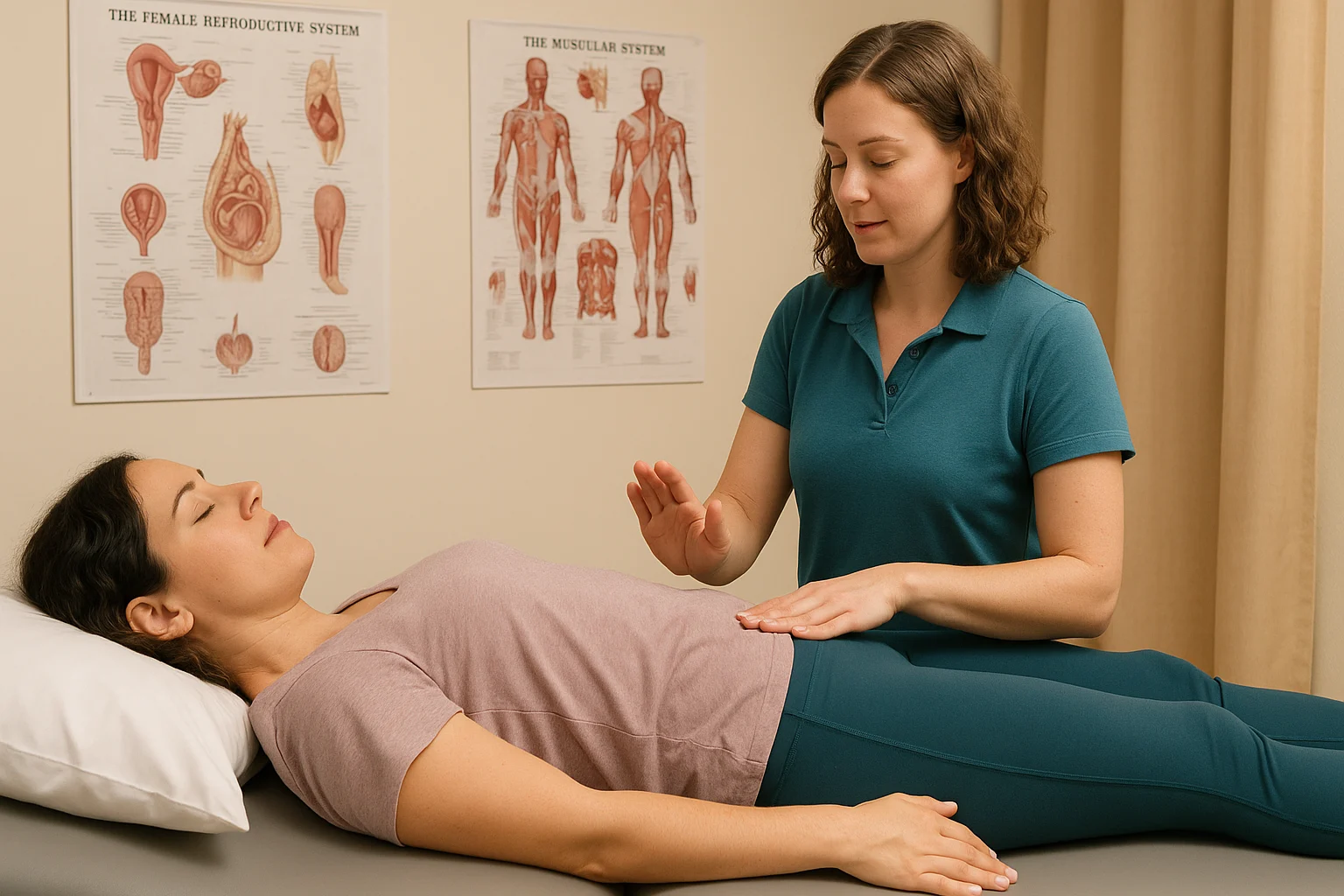
Most assessments begin with talking, not examining. A clinician will usually ask what you notice, when it started, what makes it better or worse, and how it affects daily life, along with relevant history such as births, surgery, medication, and other health conditions. That conversation alone often shapes the next step.
An internal or external physical examination may be offered where it is relevant, but an examination is a proposal, not an obligation. You can ask what it would involve and why, request a chaperone, ask to stop at any point, decline it, or ask whether a useful plan can be made without it. You can also ask for time and come back. Consent here works the same way it works everywhere else on this site: it is ongoing, and withdrawing it is a complete answer.
You do not need to arrive with the right vocabulary. Describing a symptom in ordinary words—“it feels heavy by the evening,” “it happens when I laugh”—is genuinely useful clinical information. Waiting until you can phrase it correctly mostly just delays care.
Pelvic health across life stages
Pelvic symptoms are often filed under one life event, usually childbirth. That framing leaves a lot of people assuming their experience does not count.

Pregnancy and the postnatal period are the most discussed stages, and the focused guides below cover them. But symptoms can also appear or change around surgery, menopause, ageing, weight change, chronic cough, high-impact activity, or no identifiable event at all. People who have never been pregnant experience pelvic floor symptoms too, and so do athletes, and so do people decades past childbirth.
Hormonal change around menopause can affect pelvic and genital tissue, bladder habits, and comfort during intimacy. These are recognised topics to raise with a clinician rather than things to absorb quietly, and there are several different approaches that may be discussed depending on the person.
There is no point at which symptoms become too old, too minor, or too late to mention. A long-standing symptom is still worth raising, and “I have had this for fifteen years” is a useful thing for a clinician to know rather than a reason to stay quiet.
Prepare for a clinical conversation
You can ask what may be contributing, what options are appropriate for your goals, and what risks or alternatives matter in your case. You can request explanations, a chaperone, a pause, or time to decide. For an appointment, it can help to bring a short record of symptoms, changes, relevant health history, and questions. You remain in charge of consent and pace during any examination or treatment discussion.
The question you most want answered is easier to ask when it is already written down. That is the part that is hardest to retrieve once you are in the room.
Write the Questions Down Before You Go
A printable that keeps separate space for questions for yourself and questions for a clinician, so nothing gets lost in the room.
Confirm your email to receive it. Occasional emails, unsubscribe anytime.
Something went wrong. Please check your email address and try again.
Explore focused guides
This pillar routes to narrower articles; use a supporting page only when its question matches yours. These pages provide general education and do not replace clinical care.
| Question | Focused guide |
|---|---|
| What do beginner pelvic floor exercises involve? | Pelvic floor exercises for beginners |
| What changes might matter during pregnancy? | Pelvic floor exercises during pregnancy |
| What should I know after pregnancy? | Pelvic floor exercises after pregnancy |
| Could a device be appropriate to discuss with a clinician? | Pelvic-floor exercise devices |
| How can pelvic symptoms intersect with endometriosis? | Pelvic floor therapy and endometriosis |
| What does pelvic floor massage information cover? | Pelvic floor massage techniques |
| What might change during pregnancy specifically? | Pelvic floor exercises for pregnant women |
| How can surgery affect intimacy afterwards? | Sexuality after hysterectomy |
| What about intimacy after giving birth? | Postpartum intimacy and comfort |
| Is a pelvic floor massage tool worth discussing? | Pelvic floor massage tool guide |
| How is such a tool actually used, and by whom? | Using a pelvic floor massage tool |
| When can intimacy resume after childbirth? | Intimacy after childbirth |
| What changes after a mastectomy? | Intimacy after mastectomy |
If you would rather read one longer thing than work through a set of pages, there is a general reader-friendly option below. It covers the same ground as the focused guides above, at more length.
Optional longer reading: Floored by Sara Reardon, a board-certified pelvic-floor physical therapist, is a broad guide to pelvic health across life stages. General education — not a way to identify what is causing a symptom, and not a substitute for an individual assessment.
Common questions
Take one careful next step
You do not need to interpret symptoms alone or push through pain. A useful next step may be noting a change, pausing an activity, asking a clinician a question, or opening one focused guide that matches your concern.
This article provides general health education, not medical advice, diagnosis, treatment, or a substitute for individual care. Seek urgent care for severe or sudden pelvic or abdominal pain, heavy bleeding, fever, inability to pass urine or stool, blood in urine or stool, or rapidly worsening symptoms. For personal concerns, consult a qualified healthcare professional.