
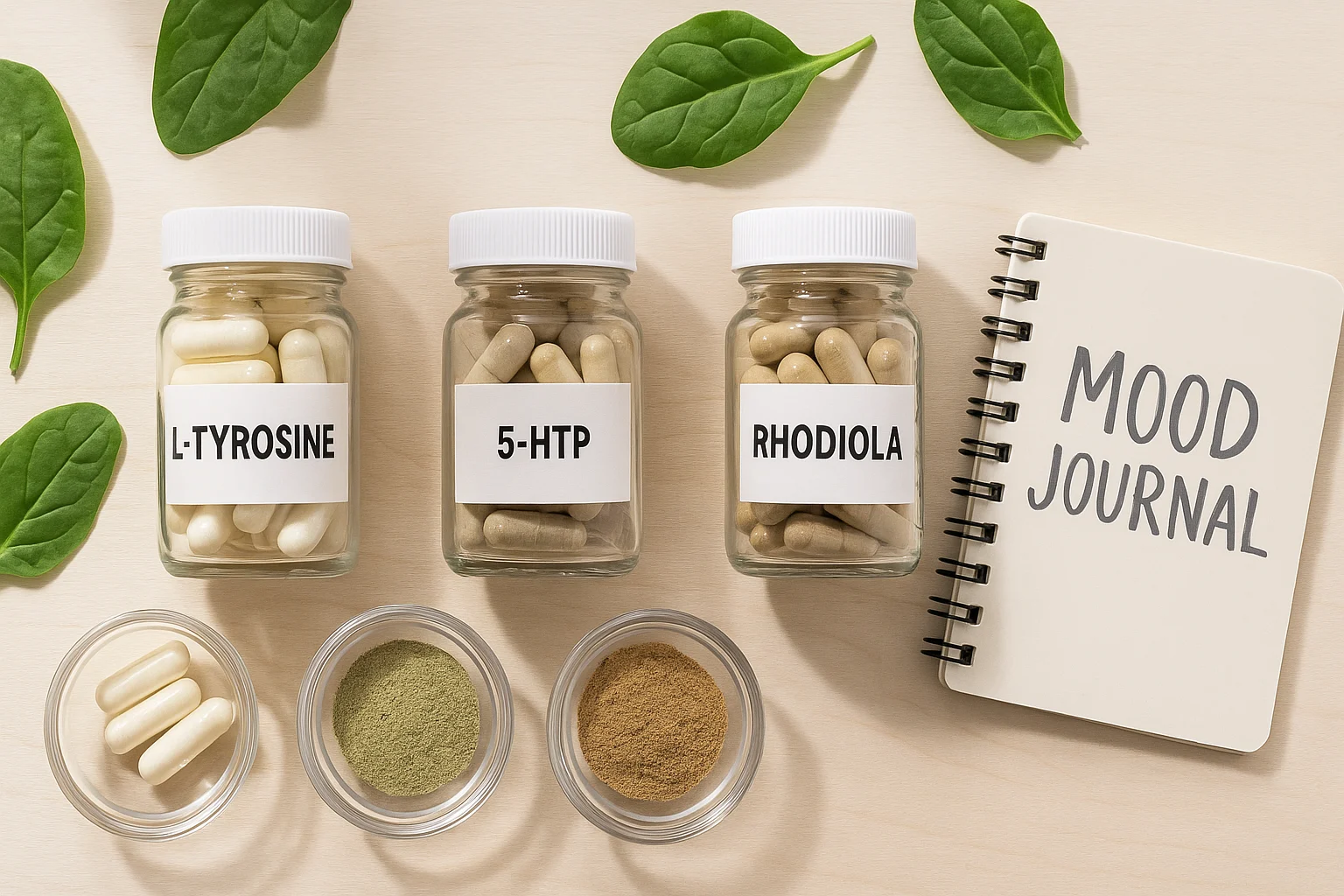
“Natural dopamine and serotonin supplements” bundles three separate questions into one phrase: what someone is experiencing, whether a neurotransmitter explanation is actually established, and whether a product is appropriate. The search phrase is not a diagnosis, a verified neurotransmitter state, or proof that a supplement will improve mood, focus, energy, sleep, motivation, brain fog, anxiety, depression, or another personal concern.
Supplements are where women’s mental wellness meets a shop, and where claims can run far ahead of evidence. What follows covers what supplement evidence and labels can support, why symptoms do not function as a neurotransmitter test, what medication and product conversations need to stay separate, and when a different support route fits better. It does not name, rank, recommend, or sell supplements, and it does not provide a dose, stack, timing plan, or self-assessment.
Table of Contents
- What “natural dopamine and serotonin supplements” can and cannot mean
- What NCCIH says about dietary supplements
- Why there is no supplement ranking or stack
- Symptoms are not a neurotransmitter test
- Product, medication, and health conversations
- When a different support route fits better
- Common questions
- Keep claims, products, and support routes separate
What “natural dopamine and serotonin supplements” can and cannot mean
People may use this phrase while looking for product information, a reason for a change in mood or energy, a way to improve concentration or sleep, a mental-health route, or a general wellness answer. Those are different questions. The activity-based version of the same brain-chemical framing is covered in natural dopamine boosters. The supplement phrase does not establish that dopamine or serotonin is low, that a supplement is appropriate, that a product is comparable to one used in research, or that a personal concern has a supplement-based solution.
Nothing written here can diagnose depression, anxiety, attention concerns, a sleep condition, a nutritional deficiency, a hormone issue, a medication effect, a substance-use concern, or another health condition. It cannot interpret symptoms, tell someone whether a supplement is needed, decide whether a supplement is safe with a medication or condition, or replace individual clinical, mental-health, pharmacist, poison-control, or emergency support.
What NCCIH says about dietary supplements
The National Center for Complementary and Integrative Health (NCCIH) guidance on dietary supplements says that scientific evidence varies widely, that products purchased online or in stores may differ in important ways from products tested in studies, and that strong evidence for claimed benefits is often lacking.
NCCIH says dietary supplements may interact with medications or pose risks for people with certain medical problems or people having surgery, and many have not been tested in pregnant women, nursing mothers, or children.
It also explains that dietary supplements are not generally reviewed for safety and effectiveness before marketing in the same way as prescription and over-the-counter drugs. “Natural” does not always mean safe, and terms such as “standardized,” “verified,” or “certified” do not necessarily guarantee quality or consistency.
None of that amounts to a recommendation. Follow a specific product label rather than a generic online routine. If a side effect occurs, NCCIH says to stop taking the supplement and contact a health care provider. For a personal product, medication, health, pregnancy, nursing, surgery, or child-use question, bring the product name and full medication/supplement list to an appropriate clinician or pharmacist rather than relying on a product list or goal selector.

Why there is no supplement ranking or stack
A “best supplement” list, dosage chart, timing schedule, mood/focus/sleep category, product comparison, supplement stack, cycling calendar, or interaction quiz can make a product choice look personally verified. It cannot establish product contents, quality, safety, medication compatibility, pregnancy/nursing relevance, an underlying cause, a neurotransmitter state, a mental-health assessment, or an appropriate treatment route.
Mood boosting supplements and natural serotonin boosters are common product-search labels, but they can make symptom-to-product matching sound more direct than the evidence supports. Neither label establishes a neurotransmitter state, a diagnosis, a treatment need, or a suitable product.
A ranking or stack can also make a difficult concern look like a simple purchase: a reader may feel pressure to combine products, change a current treatment, monitor symptoms as product proof, keep taking a product despite a problem, or postpone professional help. No product purchase, supplement routine, score, result, or explanation is required to ask for appropriate support.
Symptoms are not a neurotransmitter test
Low mood, fatigue, brain fog, reduced concentration, sleep changes, reduced motivation, anxiety, appetite changes, and feeling “off” can have many possible contexts. A symptom list, online calculator, quiz, influencer account, label, or article cannot determine a cause or turn a symptom into a dopamine or serotonin finding.
Where the concern is closer to a trauma response, where clinical support belongs is the separate route, and optional sensory self-care makes no health claim at all. Do not use a supplement page to self-diagnose or to decide whether a condition, medication effect, deficiency, hormonal concern, stressor, sleep issue, substance-use concern, trauma concern, or another health issue is present. If a concern is persistent, severe, unsafe, interferes with daily life, or needs treatment, use an appropriate qualified support route.
Product, medication, and health conversations
Where someone is selling you a plan rather than a product, what to establish before booking applies. For a personal decision about a supplement, a clinician or pharmacist can review the actual product label and a full list of medications, supplements, relevant health conditions, pregnancy/nursing status, surgery plans, and concerns. It is a conversation to support your own decision, not a product match handed to you.
Do not stop, start, switch, combine, or change a prescribed medicine because of a supplement article, supplement retailer, wellness test, product label, online account, coach, retreat, or app. A claim about mood, neurotransmitters, “balance,” energy, focus, or sleep does not establish that a product is safe or suitable for a particular person.
When a different support route fits better
Choose a different route for possible medication side effects or interactions, a concerning reaction, pregnancy/nursing/child-use decisions, surgery, a personal health question, persistent or difficult-to-manage changes in mood, energy, sleep, concentration, appetite, functioning, pain, sensation, or substance use, a need for treatment, trauma, relationship safety, or immediate danger. A supplement page, product, stack, score, label, retailer, coach, retreat, or app cannot diagnose, assess urgency, determine readiness, prescribe a response, or replace qualified local, confidential specialist or emergency support.
If you are unsure whether the question is primarily about a product, medication, mental health, nutrition, or another health issue, you do not need to solve that classification alone before asking for help. An appropriate clinician or pharmacist can review the actual context rather than a generic supplement category.
Common questions
Keep claims, products, and support routes separate
“Natural dopamine and serotonin supplements” is not a diagnosis or a product plan. Evidence, product contents, personal health context, medications, and appropriate support are separate questions. You can seek help without buying a product, naming a neurotransmitter, taking a score, or performing a wellness routine.