

A pelvic floor massage tool is not a diagnosis, treatment plan, or a safe do-it-yourself answer to pelvic pain, tightness, trauma, postpartum recovery, or a new symptom. Some people discuss these tools with a qualified pelvic-health clinician as part of an individual plan; many people do not need one. This guide helps you ask the right questions before considering a product. For where this sits in the wider picture, see our women’s pelvic health guide.
This post has affiliate links. We may earn a commission. As an Amazon Associate, I earn from qualifying purchases. Learn more.
Table of Contents
- What these tools actually are
- Start with an assessment question
- Tension is not the same as weakness
- When not to self-select
- What a clinician can help with
- Decide What You Want to Ask Before Buying
- Questions before buying
- Consider one optional tool
- Common questions
- Choose a safer next step
What these tools actually are
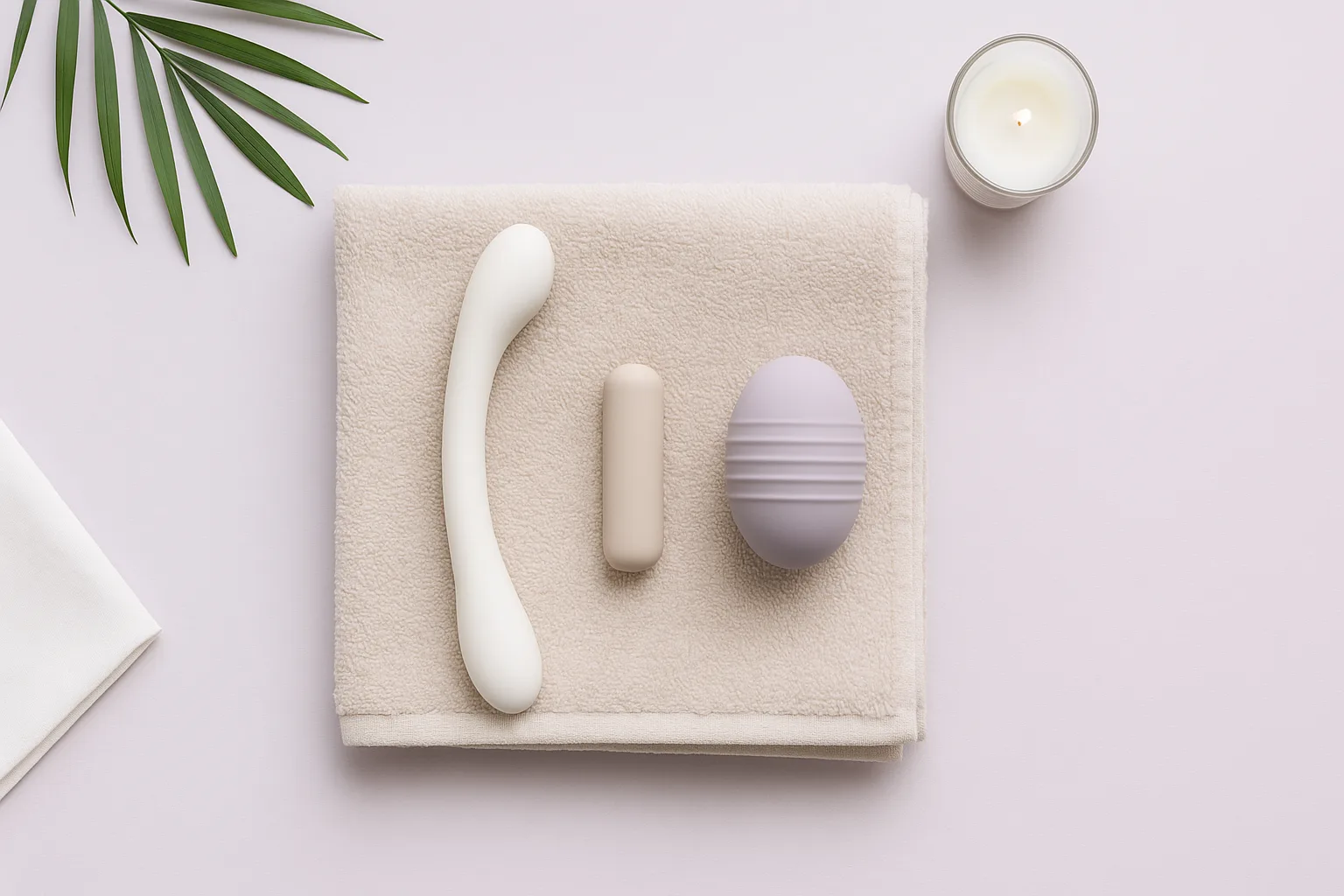
A pelvic floor massage tool — usually called a pelvic wand — is a slim, rigid, curved instrument, typically medical-grade silicone or hard plastic, with one or both ends shaped to reach a specific area. The most common form is entirely passive — no motor, no settings, nothing to adjust — though vibrating versions are also sold. The curve exists so that a hand can reach an internal muscle without the wrist bending awkwardly; on a plain wand that is genuinely the whole of the design idea.
Wands are sold both directly to the public and through clinics, which is part of why the category is confusing. Being able to buy something without a prescription says nothing about whether it is right for you, and the packaging is often more confident than the evidence.
The more useful thing to know is that this is not the same category as a pelvic floor trainer or exerciser, even though the two get shelved together and searched interchangeably.
| Pelvic wand / massage tool | Pelvic floor trainer / exerciser | |
|---|---|---|
| Typical form | Rigid curved wand, no electronics | Weighted or sensor-based insert, often app-connected |
| Broadly associated with | Muscles that are tight or overactive | Muscles that are weak or under-recruited |
| What it asks of you | Pressure applied to a specific point | Repeated contraction and release |
They are close to opposites in intent, which is why choosing between them by browsing is a poor idea — and why a clinician’s assessment is the step that actually determines which conversation you are having. If your question is about the strengthening side, the strengthening side has its own guide.
Start with an assessment question
Pelvic symptoms can have different causes and may need different forms of care. A tool cannot tell you whether a sensation reflects tension, weakness, a medical condition, infection, injury, scar concerns, stress, or something else. It cannot determine whether any kind of internal practice is appropriate for you.
Before shopping, consider asking a qualified clinician: “Could you help me understand what may be contributing to my symptoms and whether a pelvic floor massage tool belongs in my care?” It is also valid for the answer to be no, not yet, or not needed.
Tension is not the same as weakness
Most public advice about the pelvic floor is about strengthening it. Kegels are the default recommendation, offered for almost anything, and for a lot of people that is reasonable.
But a pelvic floor can also be overactive — held tight, slow to release, working when it does not need to. Where that is what is happening, more strengthening work is not obviously the answer, which is the reason a category of tools exists that is not about contraction at all. This is also why “just do your Kegels” is advice some people report having followed for a long time without much changing.
What matters here is what cannot be worked out from that information alone. Symptoms do not sort themselves neatly into tight and weak, the two can occur together, and the same sensation can come from either — or from something that is neither. Pain, pressure, leaking, and difficulty emptying all appear in more than one picture. Nothing you can read, and nothing you can feel on your own, reliably tells you which one you are in.
The distinction is worth knowing because it explains why the shelf holds two opposite kinds of product — not because it lets you place yourself on one side of it.
When not to self-select
Do not use a product page or online tool to decide what to do with pelvic pain, new or changing symptoms, bleeding, discharge or infection concerns, pregnancy concerns, recent birth or surgery, numbness, urinary or bowel changes, a history of trauma, or discomfort with internal care. Seek individualized medical or pelvic-health guidance instead.
Use urgent care appropriate to your area for severe or sudden pain, heavy bleeding, fever, inability to pass urine or stool, blood in urine or stool, or rapidly worsening symptoms.
What a clinician can help with
A qualified pelvic-health clinician can assess your individual situation, discuss whether a tool has a role, explain alternatives, and help you understand when to stop. The plan may involve education, observation, external approaches, referral, other care, or no tool at all. An online article cannot replace that assessment.
Consent and emotional safety matter as much as physical comfort. You can decline any examination, discussion, or practice you do not want. You can ask for a slower pace, a different provider, support in the room, or information before deciding.
Before you decide whether a tool belongs in your care, it helps to have the actual question written down rather than half-remembered when you are asked to explain it.
Decide What You Want to Ask Before Buying
Space to write down the question you want to ask before a product listing answers it for you.
Confirm your email to receive it. Occasional emails, unsubscribe anytime.
Something went wrong. Please check your email address and try again.
Questions before buying
| Question | Why it matters |
|---|---|
| “Is a tool appropriate for my symptoms, history, and goals?” | It avoids treating a product as an assessment. |
| “What alternatives should I consider first?” | It makes non-purchase a real outcome. |
| “What signs mean I should stop and contact you?” | It creates a clear reversal path. |
| “What should I check about product identity, materials, instructions, hygiene, and return policy?” | It keeps a commercial decision practical and bounded. |
Two of those checks are worth being specific about, because they are the ones a listing often glosses over. Material: look for a non-porous, body-safe surface — medical-grade silicone or a comparable sealed material — with no visible seam, join, or painted coating along any part that would be inserted. Porous materials and seams can make thorough cleaning more difficult; check the manufacturer’s material and cleaning instructions. Cleaning: the manufacturer should state a specific method, including whether the item tolerates boiling or only warm water and mild soap. “Easy to clean” on its own is marketing, not an instruction.
Neither point makes a product appropriate for you. They only rule out ones that would be a poor idea regardless.

Consider one optional tool
Only once a clinician has indicated that a tool may suit your individual plan is it worth reviewing a specific product.
Intimate Rose Original Pelvic Wand — a non-vibrating wand. For someone whose clinician has already confirmed a tool fits their plan and specified how to use it. Not a recommendation, ranking, or substitute for that guidance.
Check the current listing, materials, instructions, hygiene details, seller, and return policy yourself. Do not purchase because an article suggests a tool will resolve pain, relax a muscle, address scar concerns, or change a clinical outcome.
Common questions
Choose a safer next step
The best next step may be an appointment, a referral, education, a conversation about alternatives, or no product. If endometriosis is part of the picture, whether pelvic floor therapy helps with it is the closer read. A pelvic floor massage tool should follow clarity and consent—not replace them.
This article provides general pelvic-health education and one optional product route. It is not medical advice, diagnosis, treatment, or a substitute for individualized care. Seek urgent care for severe or sudden pain, heavy bleeding, fever, inability to pass urine or stool, blood in urine or stool, or rapidly worsening symptoms.