

If you are asking, “Can pelvic floor therapy help with endometriosis?” the honest answer depends on your symptoms, goals, and individual care. Pelvic-floor therapy may be worth raising with an ob-gyn or other clinician involved in endometriosis care. Whether it is appropriate for you and what it would involve are not answerable from a description of symptoms alone. Endometriosis is a chronic condition, and pain and other experiences vary. What follows offers a short way to prepare that conversation. None of it diagnoses symptoms, prescribes therapy, or replaces individual care. For how this sits alongside related questions, see our women’s pelvic health guide.
Table of Contents
- The short answer
- Why individual care matters
- Questions for your care team
- When to seek prompt care
- Common questions
- Take one careful next step
The short answer
For some people, yes — recent systematic reviews suggest physiotherapy can reduce endometriosis-associated pelvic pain for some patients, usually alongside other treatment rather than instead of it. Chronic pelvic pain commonly leads the pelvic floor muscles to tense protectively, and that tension can add its own layer of pain on top of the endometriosis itself — which is the mechanism pelvic floor therapy addresses. It does not treat or remove endometriosis, and it is not the right fit for everyone; whether it belongs in your plan depends on your diagnosis, symptoms, medical history, current treatment, and the clinician’s assessment — the same starting point as any pelvic floor work.
Why individual care matters
Endometriosis can affect people differently. Pain and related concerns can vary over time and may have more than one contributor. A symptom pattern, checklist, product, or online routine cannot establish what is happening in your case or choose a treatment path. An ob-gyn or other qualified clinician can help you decide what questions, assessment, referrals, or follow-up fit your situation.
For a patient-focused overview of endometriosis, including its chronic nature and the importance of discussing concerns with an ob-gyn, see ACOG’s endometriosis FAQ.
Questions for your care team
Bring only the questions that matter to you. A short note can be easier to use in an appointment than trying to remember every detail in the moment.
- “What may be contributing to the symptoms or changes I notice?”
- “What options are appropriate for my goals and medical history?”
- “Would a pelvic-health referral be useful to discuss in my situation?”
- “What should make me contact the team sooner or seek urgent care?”
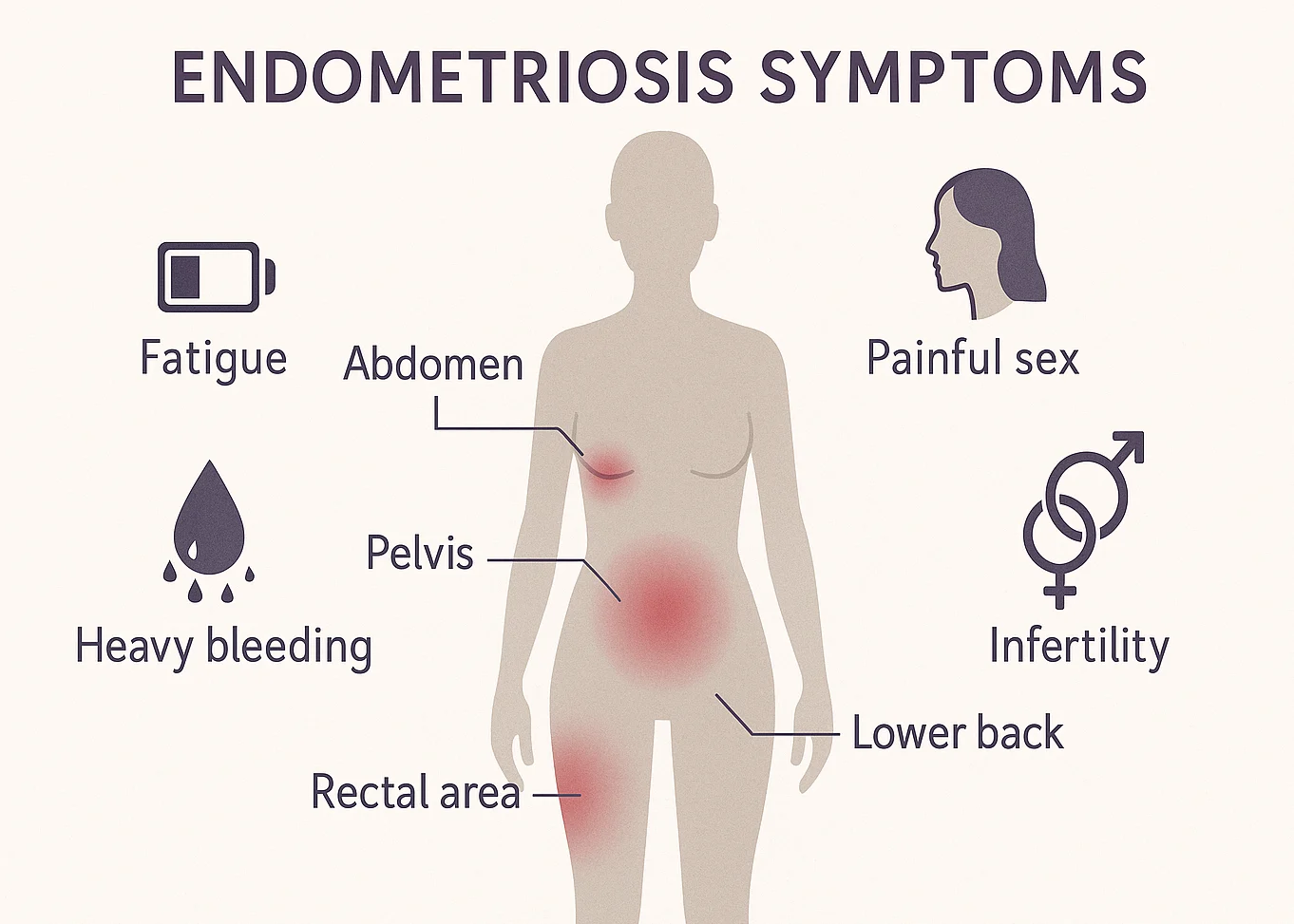
- “What support is available if pain, bleeding, fatigue, bowel or bladder changes, or emotional strain are affecting daily life?”
You can ask for clear explanations, time to decide, a chaperone, or a pause during any examination or treatment discussion. Consent and comfort matter throughout care.
When to seek prompt care
Contact a clinician promptly for new, persistent, worsening, or concerning symptoms. Use urgent or emergency care appropriate to your area for severe or sudden pelvic or abdominal pain, heavy bleeding, fever with feeling unwell, fainting, inability to pass urine or stool, blood in urine or stool, or rapidly worsening symptoms. If you are unsure how urgently you need care, contact your clinical team or a local urgent service rather than relying on an online guide.
Common questions
Take one careful next step
You do not need to decide alone whether pelvic floor therapy belongs in your endometriosis care. A useful next step may be an ob-gyn question, a symptom update, a referral discussion, or prompt care for a concerning change. The right route is the one that fits your individual situation. If you are weighing a pelvic tool, what to ask before buying one comes first — a tool cannot diagnose pain or stand in for individual care.