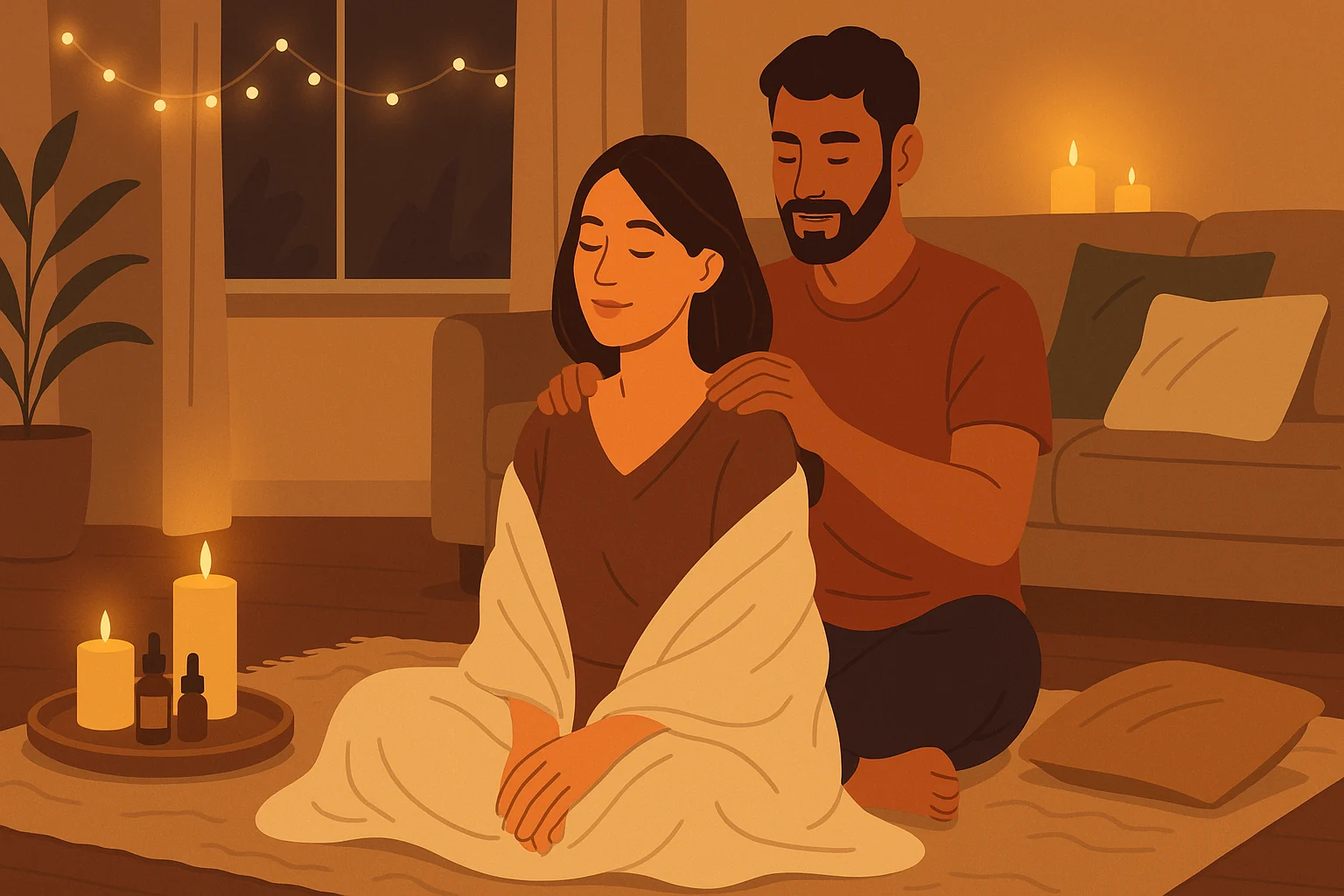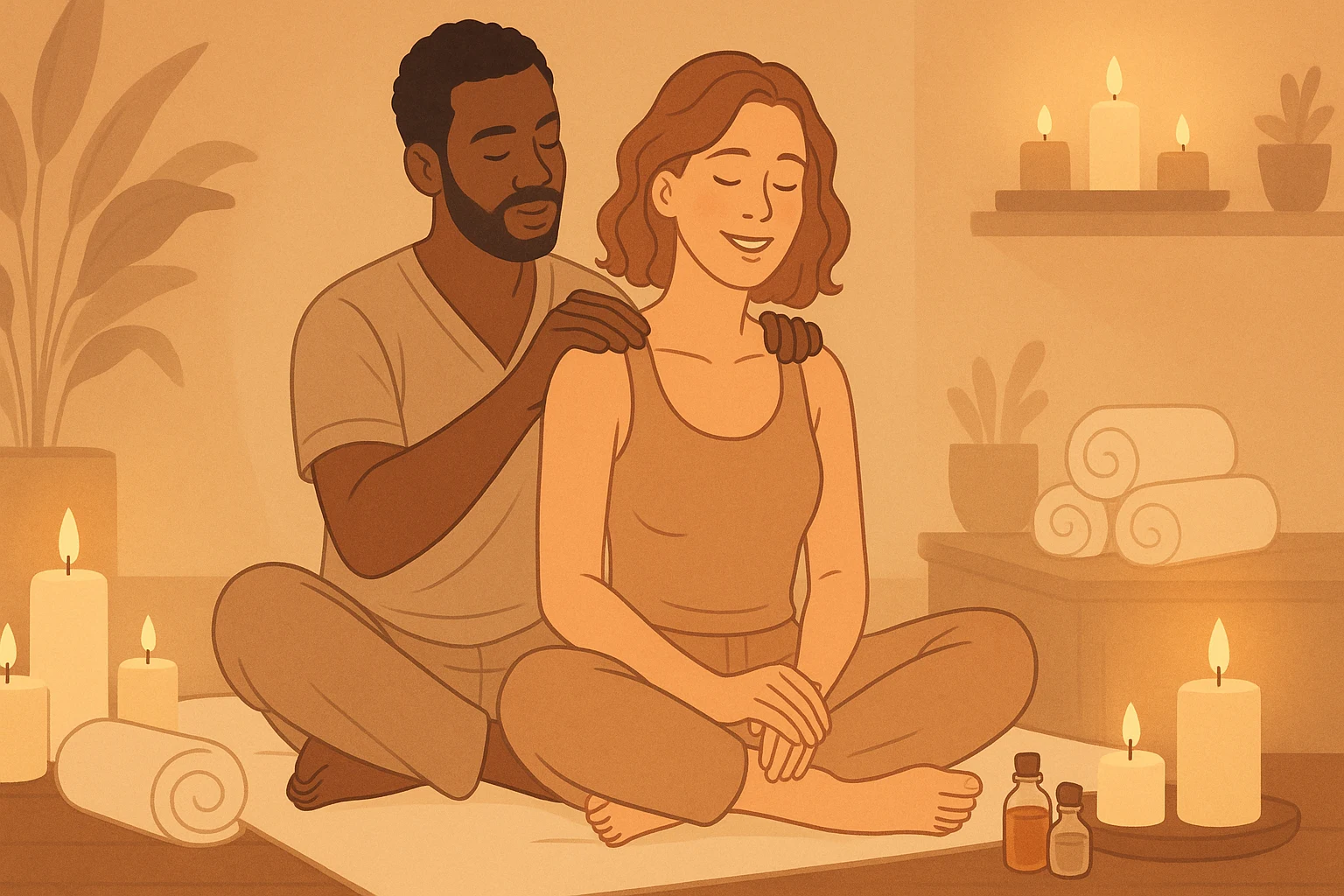
A search for couples massage classes near me turns up spa packages alongside actual teaching, and a spa package is not a class. A class leaves you with something you can repeat at home: simple pressure, pacing, and a way to ask for feedback that does not turn into a negotiation. This guide covers what to look for in a listing, what to ask before booking, and what to practice afterwards. For broader relationship context, start with our women’s relationship wellness guide.
This post contains an affiliate link. If you choose to buy through it, we may earn a commission at no extra cost to you. Learn more. As an Amazon Associate, I earn from qualifying purchases.
Table of Contents
- Start with comfort and consent
- Find a sensible class format to investigate
- What to ask before you book
- Practice at home after class
- When to choose a different route
- Two People, Two Different Answers
- Frequently asked questions
- Choose the class that feels doable
Start with comfort and consent
A couples massage class is a skills experience, not a test of closeness or a requirement to receive touch in a certain way. Before booking, agree that either person can choose clothed practice where offered, ask for a different demonstration, take a break, or skip an activity. A good class should make those choices ordinary rather than awkward.
Try this before you search: each person names one thing that would make a class feel more comfortable—more privacy, more hands-on feedback, a beginner pace, or simply a shorter session. Use those answers as your first filter.
Before you book
Find a sensible class format to investigate
Choose the setting and the guidance that matter most, and it will suggest what to look for in a listing — not which provider to use. Check the questions in the next section before booking.
Choose both options to see one screening plan.
In-person, online, and small-group options
An in-person workshop can be useful when you want an instructor to demonstrate hand placement, pacing, and ways to ask for feedback. When comparing couples massage workshops, look for the setting and teaching style that both people can participate in freely. An online class may suit you if privacy, scheduling, or a slower home pace matters more. A small private lesson can offer more individual attention, while a larger workshop may feel more social and less intense. None is automatically “better”; the useful question is what helps both people participate freely.
What to ask before you book
A polished listing is not enough to tell you whether a class will feel right. Contact the provider or read the full booking details and look for clear answers to the questions below. This is often more useful than trying to guess from photos or review stars alone.
- Who teaches it? Look for a qualified massage professional or a provider who clearly explains their relevant training and beginner teaching experience.
- What will we actually learn? A beginner class should state whether it covers simple, non-medical techniques, pacing, communication, and a home-practice plan.
- How does consent work? Ask whether partners can opt out, stay clothed where appropriate, or choose a different practice without pressure.
- What should we bring or avoid? Check the provider’s guidance for clothing, oils/lotions, skin sensitivities, mobility needs, and any health questions that need individual professional advice.
- What is the cancellation and group-size policy? A clear policy makes it easier to choose a class that fits your actual schedule and comfort level.
For the conversation side of shared practice, you may also find exercises for couple therapy useful. If a class feels too structured right now, our bonding exercises for couples offer lower-pressure ways to spend time together.
Skip the class or pause the practice if either person feels pressured, unsafe, in pain, or unable to say no. A class is not the right setting to work through coercion, ongoing fear, or harm. Prioritize individual safety and qualified local support instead.
Practice at home after class
The most useful workshop takeaway is usually a short routine you both want to repeat—not a complicated sequence. Try ten minutes: the receiver chooses an area such as hands, shoulders, or upper back; the giver asks about pressure once or twice; then switch roles if both people want to. Keep the goal modest: attentive practice, not a medical treatment or a performance. This is one low-pressure way to approach intimacy through massage without treating touch as a test.
For another non-class home starting point, see these intimacy exercises for couples. If the bigger goal is talking and feeling more understood, our guide to building emotional intimacy may be the better next read.
A plain external-use massage oil can reduce drag during a short shoulder, hand, or upper-back practice. You do not need to buy anything to use the routine above, and it is worth skipping entirely where an almond allergy or skin sensitivity is a concern. Follow the product’s own label, and never use oil to push past discomfort.
NOW Solutions Sweet Almond Oil is a plain external-use oil for the routine above — nothing scented or specialised.
The oil handles the surface. If what you actually want is more guidance on the technique itself, that is a separate question.
If the short routine above leaves you wanting more instruction, Massage for Couples by Ashley Dwyer, LMT walks through longer guided sequences and basic anatomy to refer back to at home.
When to choose a different route
A local class is useful when you want basic skills and a shared activity. It is not therapy, medical care, or a solution for pain, safety concerns, or serious relationship distress. In those situations, choose the kind of qualified support that matches the actual issue rather than trying to solve it through massage practice.
If you both want a more immersive shared experience after practicing smaller skills at home, our guide to couples tantric retreats can help you think through a consent-led next step. It is optional and not a substitute for safety or health support.
A class is easier to choose once each of you knows what you would actually want from it, and those two answers are rarely identical.
Two People, Two Different Answers
Ten printable pages, filled in privately. Day four is simply more of, less of, and not right now — worth each of you doing separately before booking something you attend together.
Confirm your email to receive it. Occasional emails, unsubscribe anytime.
Something went wrong. Please check your email address and try again.
Frequently asked questions
Choose the class that feels doable
The best local couples massage class is one that gives you a usable skill, makes room for clear boundaries, and feels realistic to attend. Start with the setting and guidance you both prefer, ask a provider the five practical questions, and keep your first home practice short. A mutual, manageable next step is more useful than trying to create a perfect kind of intimacy.