
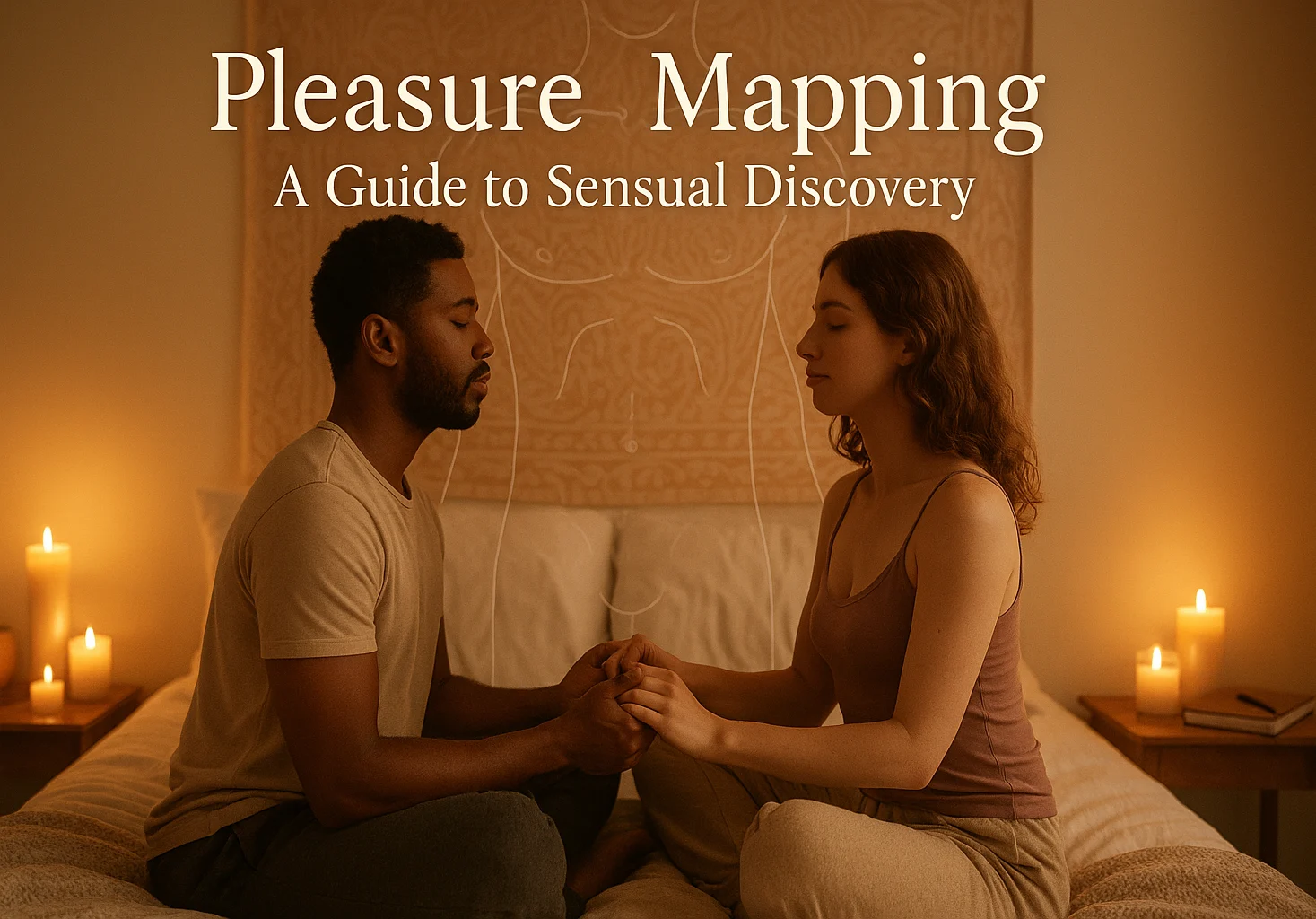
On this page, pleasure mapping means optional language for noticing and communicating personal sensory preferences and boundaries. It does not require sexual activity, touch, a partner, nudity, a body diagram, a private journal, a particular identity, or a goal of feeling pleasure. A preference can be “yes,” “no,” “not now,” “I do not know,” or “I would rather not explore this.”
Within sensual wellness for women, language is the part people most often lack, and the part hardest to ask for. This is not a way to diagnose low desire, pain, trauma, relationship safety, a health issue, or sexual function. It cannot tell you what your body “should” enjoy or what a partner should do. The point is choice, not discovery for its own sake.
Table of Contents
- What pleasure mapping can mean
- Start with choice, not a body map
- Using preference language alone
- Somewhere to Put It That Isn’t a Map
- Using preference language with a partner
- Privacy, pressure, and boundaries
- When this is not the right route
- Common questions
- Keep the language optional
What pleasure mapping can mean
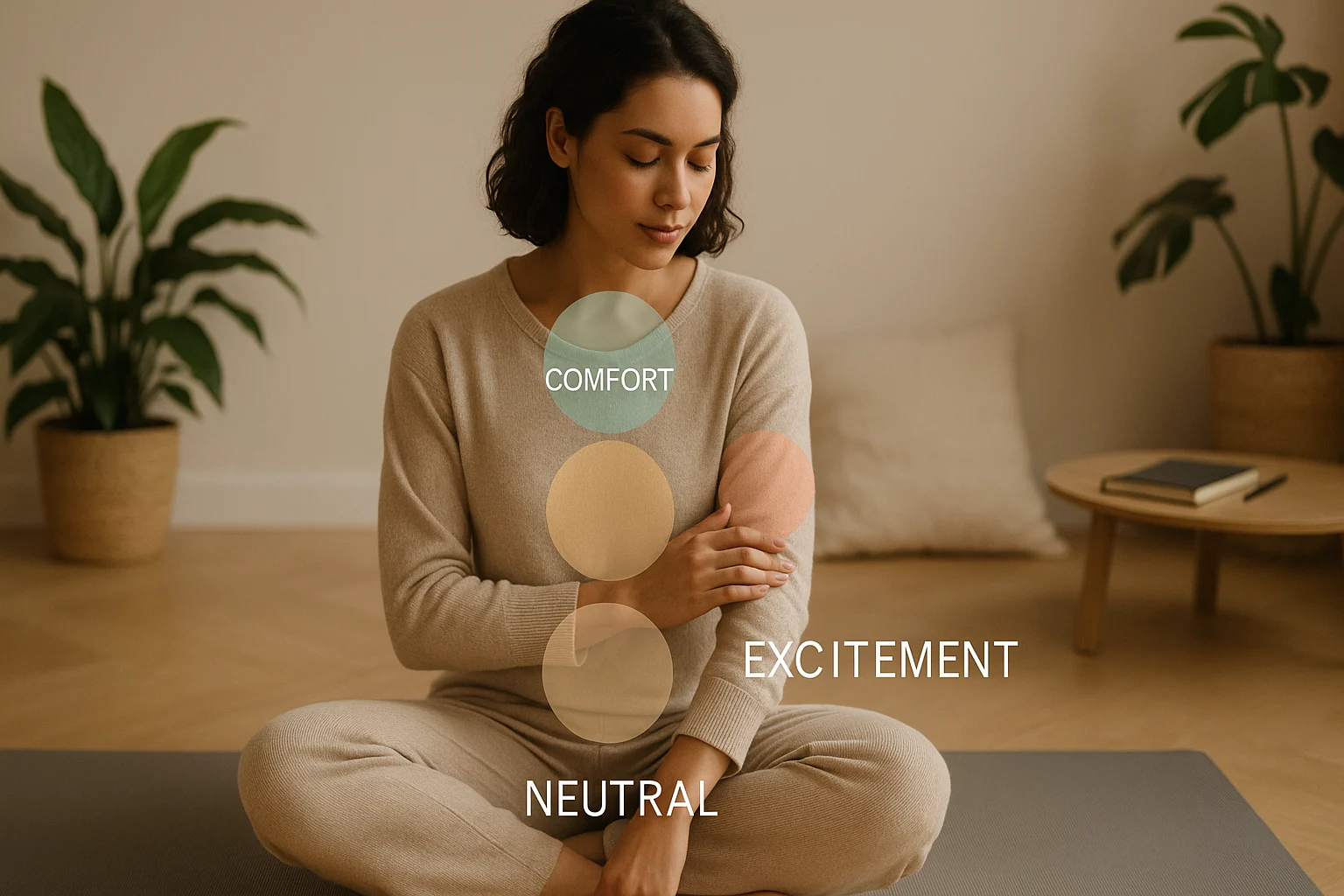
Some people use this phrase for a private way to notice what feels comfortable, neutral, unwelcome, interesting, or unknown. Others use it as a conversation framework. The words matter less than the boundary: you are allowed to name a preference without explaining it, turning it into a project, or acting on it.
“Sensual exploration” can include ordinary non-sexual preferences such as quiet or company, a particular fabric, light or darkness, food temperature, music or silence, movement or stillness, or the choice to stop an activity. “Intimacy mapping” can be a conversation about pace, privacy, disclosure, or what each person does not want to discuss. Neither label proves a shared desire or consent.
Start with choice, not a body map
You do not need to scan, rate, test, touch, photograph, draw, label, or revisit any part of your body. If you want a small starting point, choose a general question instead: “What would feel more workable right now?” The answer may be rest, personal space, clearer information, a boundary, an ordinary comfort, or no action.
A preference can change between moments. It does not create a promise, a rule for another person, a treatment plan, or evidence that something is wrong. Do not use a list, colour code, timer, score, mood state, or “green/yellow/red zone” model to pressure yourself or anyone else into a future activity.

Using preference language alone
If you want to use the idea privately, keep it light and non-diagnostic. You might notice whether you would prefer less stimulation, more space, a quieter setting, a familiar activity, a different pace, or nothing at all. You do not need to score the answer, explain it, or repeat the exercise. You can change your mind without treating that change as a setback.
If a fixed practice is not what you want, smaller options that need nothing bought sit alongside this one. A private note is optional, not a tracker. If you only need somewhere to hold a question, a boundary, or a next choice, the free self-care journal PDF is enough — it is not designed to measure progress, predict readiness, or interpret a feeling. Want a longer guided practice instead?
Better Sex Through Mindfulness
A more structured paid workbook on mindfulness and sexual wellbeing than the free journal above. Skip it if structured exercises are not what you want.
If the preference is simply about a scented or unscented bath, treat that as an ordinary environment and product-safety choice rather than something a body map needs to interpret. The safety-first guide to bathing in essential oils covers label limits, when to skip the oil, and scent-free alternatives without turning a bath into a treatment or a required ritual.
Noticing and interpreting are separate acts, and the second one tends to arrive uninvited. Somewhere to record the first without the second is more useful than it sounds.
Somewhere to Put It That Isn’t a Map
Ten printable pages, filled in privately. Day one asks what felt comfortable and what did not, and stops there — the scales carry a line saying they are not a score.
Confirm your email to receive it. Occasional emails, unsubscribe anytime.
Something went wrong. Please check your email address and try again.
Using preference language with a partner
With another person, a preference is information, not permission. A lower-risk conversation can use plain language: “I would like to pause,” “I am not sure,” “I do not want that,” “Can we keep this private?”, “I need more information,” or “I have changed my mind.” A response should not depend on proving discomfort or providing a reason.
Ask rather than assume. A past yes, a conversation, a relationship, a shared home, a purchase, an event, or a nonverbal cue does not create consent for a new activity. Agreement should be voluntary and can be withdrawn. If there is uncertainty, pause rather than interpret it.
For ordinary lower-risk wording, see how other people phrase a limit. This page does not provide a substitute for confidential specialised support in a coercive or unsafe situation.
Privacy, pressure, and boundaries
Keep personal information private unless you want to share it. You do not owe a partner, facilitator, coach, friend, group, app, quiz, or article a written map, image, disclosure, list of body areas, explanation of past experiences, or evidence of openness. Do not share another person’s stated boundaries or private information without their permission.
Pressure can include persistent asking, guilt, sulking, bargaining, withdrawing affection, ridicule, threats, monitoring, isolation, or treating a “no” as a problem to solve. In those circumstances, a communication script, a self-help exercise, or a relationship page is not enough. Prioritise confidential local specialist or emergency support.
When this is not the right route
For the plain public-health definition behind all of this, what the term actually covers keeps it in proportion. Do not use pleasure mapping to decide why there is pain, numbness, a change in sensation, bleeding, medication concern, pregnancy/postpartum question, pelvic-health issue, trauma response, anxiety, or relationship-safety concern. A self-help page cannot diagnose, assess readiness, provide a sexual technique, or determine whether you need professional care.
If a concern is painful, persistent, severe, unsafe, or difficult to manage, use an appropriate qualified local, confidential specialist or emergency route. Where fear, coercion, stalking, threats, control, monitoring, isolation, or violence are present, prioritise confidentiality and safety rather than a self-help exercise or partner conversation.
Common questions
Keep the language optional
You do not need a map, a journal, a partner, a purchase, or a practice to know that a choice is yours. Use a word only if it helps you communicate a preference or boundary. You can also choose quiet, privacy, a pause, a no, or a different form of support.