
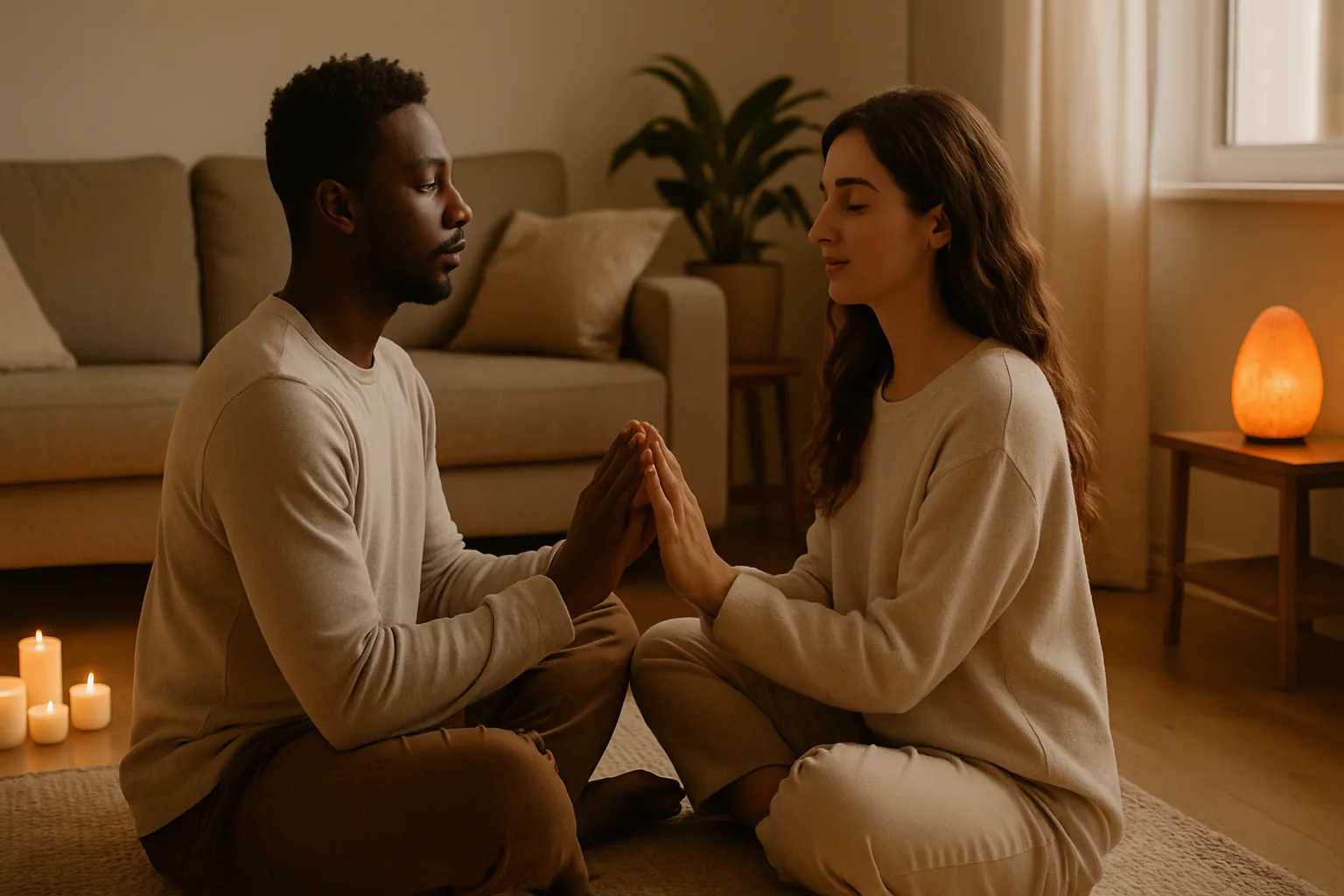
Couples meditation exercises are optional shared-presence practices, not a test of closeness or a treatment for a relationship problem. You can practice alone, together, briefly, without eye contact or touch, or not at all. Whatever it gets called, it describes the same modest thing: a few minutes of shared attention, freely chosen. This guide offers adaptable prompts and a valid pause. For broader context, see our women’s relationship wellness guide.
Table of Contents
- Start with choice
- Make space for presence
- Try one optional practice
- Find a practice for tonight
- Common questions
- Keep the One That Worked
- Leave with one honest next step
Start with choice
A shared practice only works when it remains optional. Ask whether the other person would like shared quiet, a short check-in, separate practice, or no activity. If naming that preference feels difficult, start by learning how to communicate your needs clearly. A no, a pause, closed eyes, no eye contact, no touch, or a different format are all valid.
Do not use meditation, an exercise, a retreat, or a couples process to manage coercion, violence, ongoing fear, trauma, a health concern, or a mental-health crisis. Prioritize safety and qualified local support. U.S. readers can use the National Domestic Violence Hotline.
Make space for presence
A “meditation space” can be a chair, a walk, a quiet corner, or separate rooms. Comfort, privacy, and accessibility matter more than candles, special clothes, posture, spiritual language, or a perfect routine.
The two things that actually help are unglamorous: a time when neither of you is about to be interrupted, and agreeing in advance how it ends. Five minutes with a clear finish is easier to say yes to than an open-ended invitation, and it removes the awkward question of who stops first. Phones in another room does more for this than anything you could buy for it.
Try one optional practice
| If you want… | Try this | Boundary |
|---|---|---|
| A calmer pause | Notice three neutral sounds, sensations, or objects around you. | Stop if noticing inward feels unhelpful. |
| Shared presence | Sit or walk nearby with no requirement to match breath, gaze, or speak. | Separate practice is also valid. |
| A small reflection | Each person may share one thing they notice or appreciate. | Sharing is optional; listening does not require agreement. |
| Something to do with your hands | Wash up, fold laundry, or walk somewhere familiar without talking about anything that needs deciding. | This counts. Stillness is not the requirement. |
| A shared focus that is not each other | Sit facing a window, a garden, or a fire rather than facing across a table. | Easier for anyone who finds direct attention uncomfortable. |
| Separate practice, same room | Both people doing their own quiet thing near each other, with no shared activity at all. | Proximity without a joint task is a legitimate version. |
If it goes badly, the usual reason is not a lack of commitment. One person is more comfortable with silence than the other, or the timing was wrong, or being still surfaces whatever was being outrun. None of that means it failed — it means you found the version that does not suit you. Shorter, moving, or separate are all reasonable next attempts, and so is deciding this is not your thing.
A few quiet minutes at home is a real practice on its own — it does not need to lead anywhere else, and it does not become more valuable by getting longer.
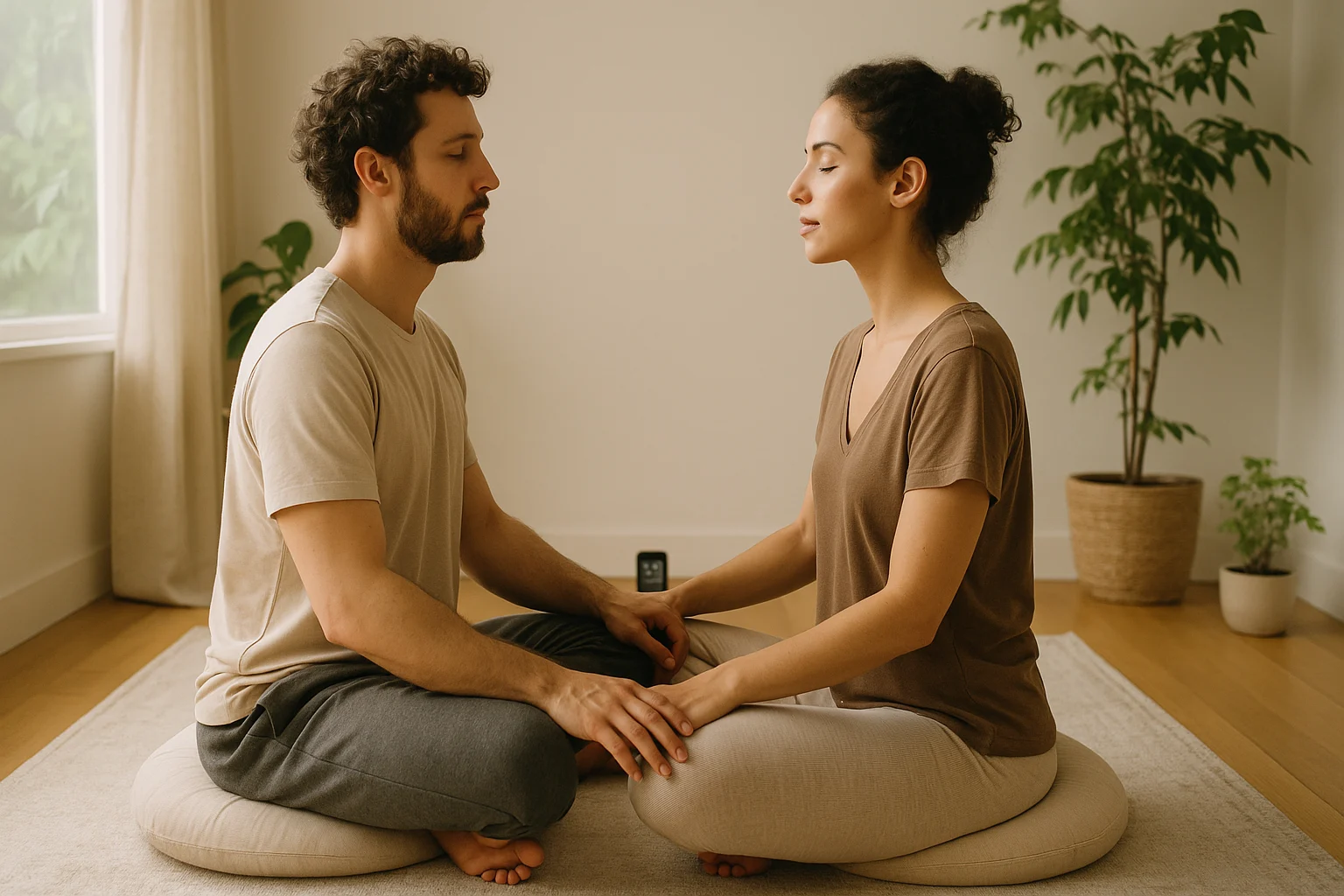
If quiet practice feels too static, these bonding exercises for couples offer more active ways to spend intentional time together.
Before you begin
Find a practice for tonight
This is not a meditation score, a safety assessment, or a diagnosis. It gives one limited in-page prompt that can be changed, declined, or paused. If there is fear, coercion, threats, immediate danger, trauma distress, or a mental-health crisis, use the safety guidance above instead.
Choose both options to see your result.
Common questions
Most shared practices are abandoned quietly rather than decided against. Writing down the one you would actually return to is what stops that happening by default.
Keep the One That Worked
Ten printable pages you keep to yourself. The final day asks only what deserves attention now, and what one small step would make it easier — no schedule attached.
Confirm your email to receive it. Occasional emails, unsubscribe anytime.
Something went wrong. Please check your email address and try again.
Leave with one honest next step
A meditation practice can be shared, separate, brief, adapted, or declined. The right next step is not a perfect session or deeper ritual; it is one that leaves you with more choice and less pressure. A single exercise cannot create closeness by itself. If that is the broader goal, this guide explains how to build emotional intimacy through everyday interactions.
This article provides general mindfulness and relationship education. It is not medical advice, mental-health treatment, trauma therapy, crisis support, or a substitute for qualified professional care. Do not use meditation or a couples process to manage coercion, violence, ongoing fear, trauma, a health concern, or a mental-health crisis.