

Pelvic floor massage techniques are not a universal home treatment for pelvic symptoms. Pain, pressure, urinary or bowel changes, surgical or birth recovery, and discomfort with intimacy can need different kinds of assessment. What follows can help you prepare for clinician-guided care. Whether massage is appropriate, which area to touch, and what result to expect are questions only that conversation can answer. If you want the wider map first, our women’s pelvic health guide sets out how these questions connect.
Table of Contents
- Why a chart or video cannot decide this
- Start with assessment
- Questions to bring
- When to pause and seek care
- A tool or technique is not a plan
- Common questions
- Choose a supported next step
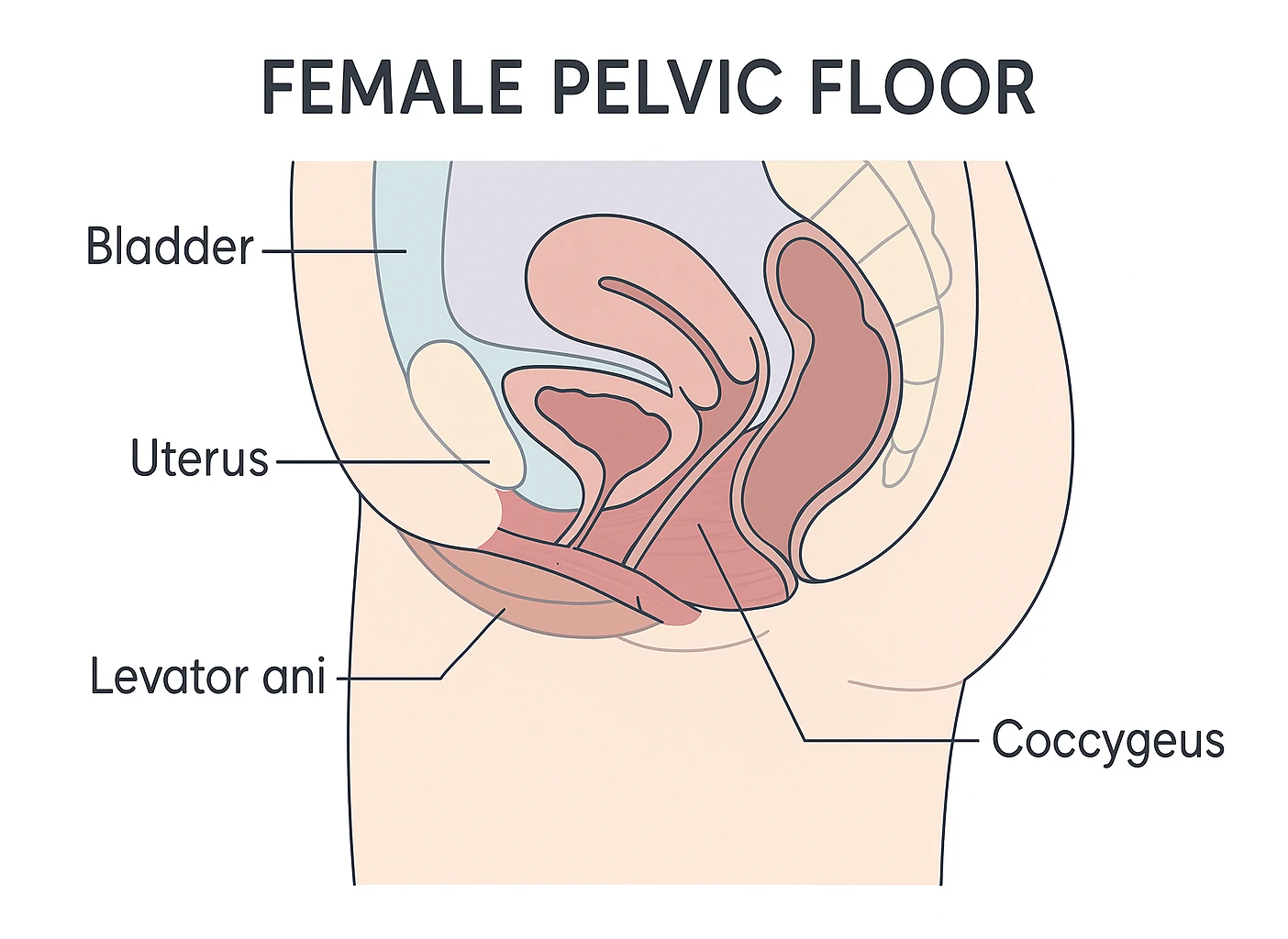
Why a chart or video cannot decide this
A chart, video, symptom selector, or product listing cannot assess muscles, identify a cause of pain, decide whether internal or external touch is appropriate, or prescribe pressure, location, duration, or progression. Do not treat a “tender spot,” discomfort, or online anatomy map as a diagnosis or a target to work through. If a clinician has already raised the idea of a tool, what to check before buying one is the next thing to read.
It is reasonable for a qualified clinician to recommend another form of care, more assessment, a referral, or no self-directed technique. A no-tool answer is still a supported answer.
Start with assessment
If you are considering pelvic massage after pain, a change in bladder or bowel habits, surgery, childbirth, or an intimacy concern, begin with a qualified clinician who can assess your history and current symptoms. Individual instruction, if any is appropriate, belongs with that clinician—not an online protocol.
Pain is not a cue to press harder or continue. Stop if something hurts, causes bleeding, feels frightening, or does not feel right. Describe what happened to a qualified clinician instead of trying to correct it alone.
Questions to bring
| Question | Why it helps |
|---|---|
| “Could pelvic muscle tension be relevant to what I am noticing?” | It invites assessment without self-diagnosis. |
| “Is massage or any self-directed technique appropriate for me?” | It puts suitability before a protocol or purchase. |
| “What is the goal, and what would mean I should stop?” | It replaces an outcome promise with a clear reversal route. |
| “Can you show me what you recommend for my situation?” | It keeps individual instruction with a qualified professional. |
| “Would another referral or form of support make more sense?” | It prevents one approach being treated as the only answer. |
When to pause and seek care
Do not begin or continue self-directed pelvic massage when you have pain, bleeding, fever, new or worsening symptoms, urinary or bowel changes, numbness, dizziness, fear, or uncertainty about whether it is appropriate. Contact a qualified clinician for individualized guidance. Seek urgent care appropriate to your area for severe or sudden pain, heavy bleeding, fever, inability to pass urine or stool, blood in urine or stool, or rapidly worsening symptoms.
A tool or technique is not a plan
Neither a tool nor an online technique can establish appropriateness or replace assessment. If a clinician has already advised you to consider a pelvic tool, this guide explains why pelvic-tool instructions must be individualized. It is not clinical instruction.
Common questions
Choose a supported next step
The next useful step is not a self-massage score or protocol. It may be an appointment question, a referral, a clear stop point, more assessment, or no self-directed technique at all. If endometriosis is part of your diagnosis, this guide explains how pelvic-floor therapy may fit into that care conversation. You do not need to buy or use anything to show that you are taking pelvic symptoms seriously.